 |
 |

|

Looking for reviews from pre-pandemic? They're here.
 Yuhiro Omakase Box
The Perfect Birthday Present
10 pieces of assorted nigiri sushi and a Toro pickled veggies maki roll. Delicious!
That's a slab of real wasabi root right there in the lower left corner. Zesty hot, but not too hot like the wasabi toothpaste served at other sushi restaurants. The ginger... well, I don't care for it. It's not a knock against Yuhiro's ginger, but ginger in general. I'm not a fan of ginger unless it's ginger scallion wok-cooked fish.
The Toro with pickled veggies roll didn't look too impressive at first, but it quickly stood out as an impressive bite... or four. If I may be so bold, but what I thought of as a mistake at first turned out to look like a maki roll with a flower design with the toro as the flower petals and the pickles as the stem and leaves. Okay, maybe the chef just put it together without any intention, but I don't think so. He took good to great care with each piece of nigiri, so I think the roll had a theme, too, even if subconsciously.
The ordering of the nigiri has me a little confused. The best piece - the akami - was first. What could possibly top one of the best pieces of akami in Philadelphia? The way they meticulously trim away all the sinews in the flesh makes their akami one of the most decadent, melt-in-your-mouth experiences around. The hamachi with truffle is almost as good as the akami. The toro was disappointing this time around. There were unchewable sinews in mine. I hadn't experienced this before in their sit-down omakase. I could forgive the toro if the rest of the pieces were perfect, and they were so all is forgiven. The madai was good, the hotate scallop was better, the salmon was better still. Then the sable fish hit and it hit hard... it was PERFECT. It didn't need any topping. Cooked back to raw in shima aji... such flavor! Botan ebi with uni... even more flavor! Finally, the pièce de résistance... that final piece... the anago with foie gras butter was amazing... just amazing.
How do you eat this? One piece at a time, as if you were served one piece at a time at a sit-down omakase. But let's be real. You can rearrange the order of consumption. You can interleave the four pieces of toro maki with the nigiri. You don't have to follow the order. But, if you do, you'll get to experience what the sit-down omakase is like, but without the warm, seasoned rice. For just $12 more, I'd much rather do that, but if I'm in a hurry or don't have much time to devote to dinner, this takeout box is the next best thing.
 The Holy Grail of Quail
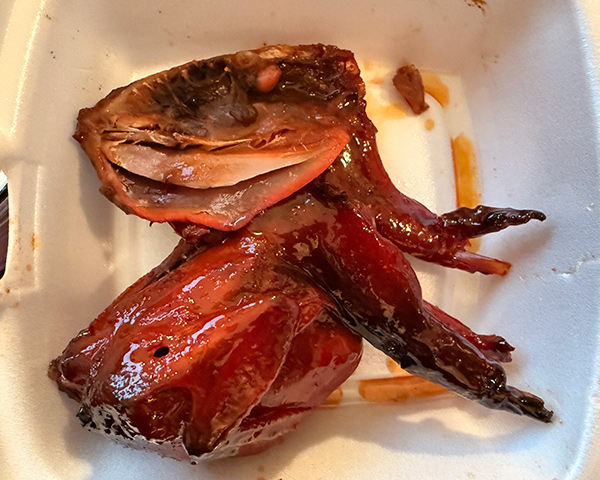
I've been coming here for roast meats for a long time. Their roast duck is always a winner. Today, I tried their Honey BBQ Quail. It is the Holy Grail of quail! The flavor is amazing. The meat is a bit firmer than I'd like but each bird is only $5! If you are patient with your picking, you will be handsomely rewarded with some very delicious, flavorful bites. It's like eating a tiny chicken that tastes more like duck.
Just remember that these are fully grown quails. They're really that tiny! Siu Kee cuts them in half, right down the middle. Be careful of the ribs and other small bones. They are very delicate. Some people eat the bones because they're thin, hollow, and crispy like potato chips, but I suggest avoiding them and going for the meat. There are tiny morsels of meat and skin to enjoy on their tiny wings and legs. Just think... you are eating a little dinosaur!
That finger-lickin' good sauce that coats the quail is something to marvel over. Honey BBQ? Sign me up for some bottles of that! I think it's the same sauce as on their roast pork. If two quails are not enough, get three. You're bound to find that heavenly bite in there somewhere. It looks and tastes almost like... almost like... a little tandoori chicken! That same charred tips taste. But tandoori chicken isn't sweet. This is. That's what makes this special.
This is not a sit-down restaurant, but more of a takeout place selling meats and meals. I recommend the roast duck on rice, which comes with a side of leafy greens. Authentic Cantonese soul food right here!
 My Favorite Porterhouse So Far
I'm not sure what America's obsession is with beef, but it seems to be the premium item at most restaurants. Many people think that a filet mignon or New York Strip is the best thing on a menu. I tend to look at fish as the premium item, but that's just my preference, I suppose. Rockwell & Rose is the newcomer to the steak game and it has a lot of competition in the Philly steak scene. You have the established local spots like Butcher & Singer, Barclay Prime, and Alpen Rose as well as the chains like Capital Grille, Ruth's Chris, and Del Frsco's. Just down the block from Rockwell & Rose is Umami Steak and Sushi, which prepares really good steak, or so I've heard.
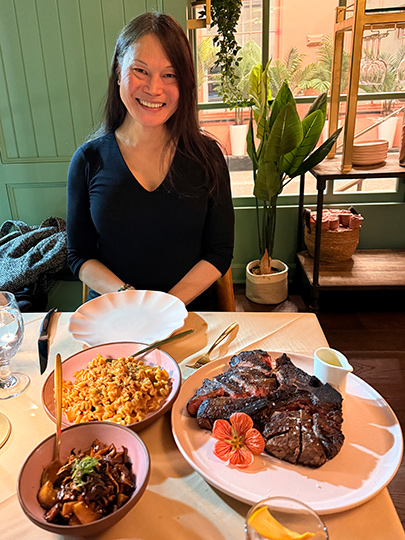
So what makes Rockwell & Rose special? It's located in that beautiful Curtis building, once the home of my dreaded oncologist's office, but I digress. The interior has been gutted and the restaurant looks beautiful and appropriate for dates and special occasions. The dinner handkerchiefs are folded to resemble a rose. Nice touch. The menu resembles a treasured keepsake with its images from a time long ago on the lefthand side and food items on the right. Prices are pricey, but you get what you pay for in most steakhouses. The tableside cut Society Hill Porterhouse for Two for $145 is the thing to get. I'm always a bit hesitant on the strip side of a Porterhouse, but this one destroyed all my expectations. The strip was just as tender and flavorful as the filet side. That's hard to do and I would suggest that any new (and current) steakhouse chain take a gander at what this restaurant is doing to their meat. It is amazing. The Oven Roasted Bone Marrow appetizer is amazing. The sides of Kennet Square Mushrooms and Lobster Mac & Cheese were great and good, respectively. The Monkey Bread dessert is amazing. The fact that I can still fit into my clothes after eating all that is amazing.
Food this good is a sometimes food, but I wouldn't mind making it a frequent food. It's that good. If you don't get your steak medium-rare or rare, you are wasting your money. You want to taste that juicy goodness. The mushrooms also have that juicy goodness. My dinner companion and I traditionally get lobster mac & cheese, but, as with sides of this sort, I always feel like there should be more lobster. The monkey bread was warm and crispy on the outside and pillowy soft on the inside. It's basically a big cinnamon roll, but it's got that wonderful camelization of sugar and cinnamon dripping all over it.
This one is an easy thumbs up. For food, this place shines. Its close proximity to the Walnut Street Theater and the somewhat close Forrest Theater make it an excellent alternative to the Broad Street steakhouses. Highly recommended.
Sushi Takeout Fantasy v. Reality
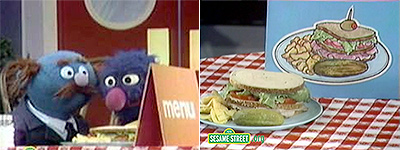 Who can forget the classic Sesame Street skit with the disgruntled restaurant customer trying to receive a sandwich that matches the menu picture? On the one hand, menu pictures are supposed to give us an idea of what we will receive. On the other hand, what we receive should match the picture, if not exactly, then at least somewhat so. Some restaurants use elaborate plastic models to showcase their food. In a way, it's false advertising, but we've come to accept it as normal behavior for certain chain restaurants. When I was in art school, we learned how to make fruits appear more pleasing in pictures by brushing them with a thin layer of olive oil and positioning them under lights at multiple angles.
Sushi shouldn't be a takeout meal, but here we are in the mid-2020s where worklife and the economy has forced us to rethink our meal planning. This section is about fantasy versus reality. What you will see in a promo ad is likely fantasy. I will provide you with the reality, the actual food you will receive, and I will praise or criticize it accordingly.
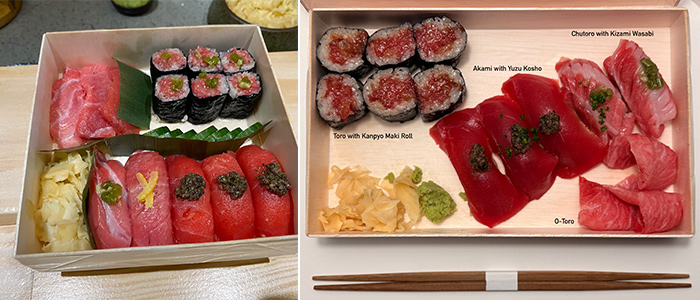
First up, we have Kichi Omakase, a beloved sushi omakase restaurant in Philly known for its affordable omakase meals. I've had their omakase; it's legit. They also have a lesser-known, but equally amazing, takeout menu with special boxes for tuna lovers, salmon lovers, shellfish lovers, and more. They recently did a refresh of their photos on their takeout web site, now providing you with actual photographs of the food versus doctored up images of something you may never see. Kudos to them for this. Reality is always better than fantasy when it comes to food. Remember that I was a fine arts photographer, which explains why my picture on the right looks more like fantasy than their promo picture on the left. I assure you the meal on the right is real. It looks pretty close to their picture on the left, minus the separators. Why the heck did they omit the separators? What if I had to drive home like a maniac so I could munch on this fabulous feast? Quite possibly, my meal contents would've shifted all over the place. That's one complaint I have about the reality versus the fantasy: no meal dividers. It's like they ran out of banana leaves. The second is what happened to the garnish on top of my Toro roll? It would've been a nice touch, even if it's the same garnish that sits atop the Chu-Toro nigiri. The third is each Chu-Toro in the picture has a different garnish; mine has the same one. Is it because one of my two Chu-Toro nigiri should've been O-Toro instead of Chu-Toro? Hmmm... So, the box could've been better organized and protected with the use of banana leaf dividers, especially for the price of $48.
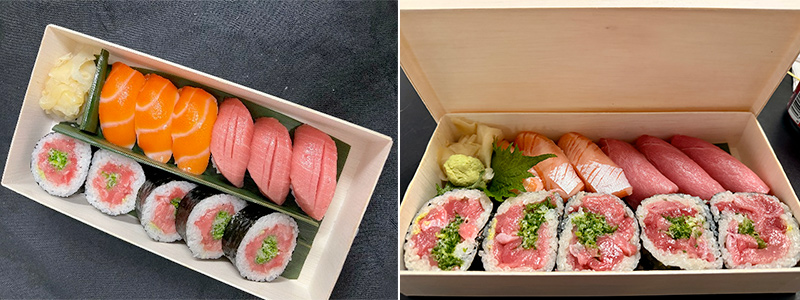
Next up, we have Sushi 35 West. Some sushi lovers claim it's the GOAT sushi takeout service. Their sushi pictures certainly look nice. The owner used to work at Masa, so I was impressed when I saw the promo picture of the Royal Sushi Box on the left with its beautiful nigiri and round Toro negi roll. So what the hell happened with my order? The roll looks squashed. Whoever made it left tendons in the meat, so there were parts I couldn't chew very well. The nigiri was very good, but it didn't look like the plump, inviting pieces of nigiri in the promo picture. The banana leaf dividers were missing. Only the bottom of the box was lined with banana leaves, presumably to keep the rice oils from soaking into the very thin wood of the box. On the plus side, the sheer amount of Toro in the roll makes up for the sinew, but it would've been much better without it. At $57, it's a bit pricey for what it is. For taste, I give it a big thumbs up; for appearance, it gets mediocre marks. The restaurant is on the second floor of a smoke shop; it's a tight little space where eight people are crammed into a space that comfortably fits three. Two small tables and chairs are out front, right next to a rack for takeout orders.
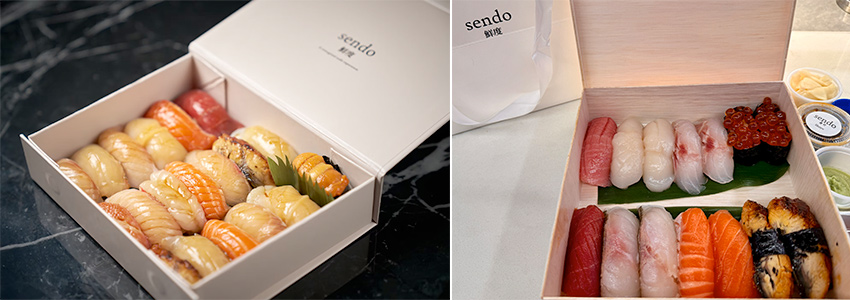
Finally, we have Sendo. I feel Sendo is all about marketing. Look at the perfect-looking sushi box in their promo picture of the Nagoya Set. It even has "Sendo" emblazoned on the inside of the box. The reality is much different. No branded box. The sushi is not arranged very nicely in an alternating pattern and there is no light brushing of sauce on each piece as the promo picture shows. Botan ebi and sea urchin appear in the promo picture, but don't appear in mine. Highlights are the akami zuke, Toro, King Salmon, and scallops. Sendo should've included a magnifying glass, because their sushi is quite small. For whatever reason, people really prize ikura these days. I remember a time when ikura was just another cheap sushi item, like salmon or any of the cheap whitefish, so it's remarkable that people think ikura is something special. I suppose it appeals to caviar lovers, but here's the strange thing... Sendo's ikura was stuck together a bit much. Something was off. At $45.50, the box was a big let-down for me.
More fantasy versus reality pictures to come!
Chirashi Oh-My-Gashi!
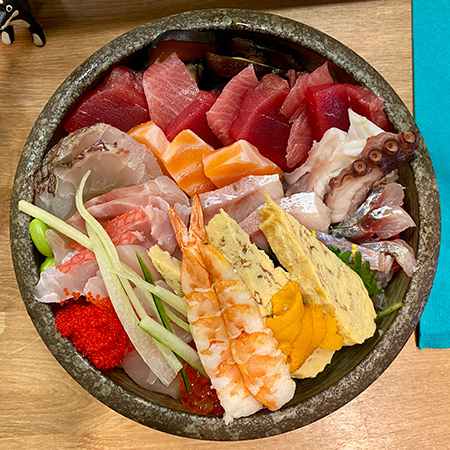
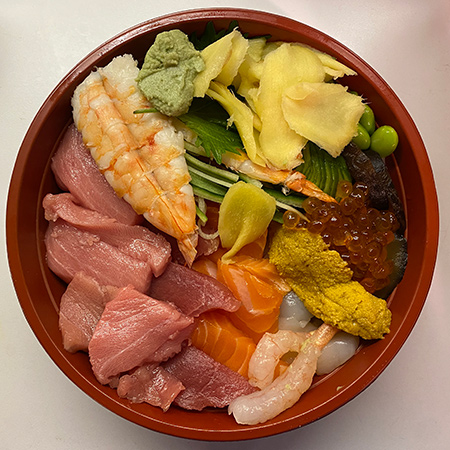
If you love sushi and sashimi, you love chirashi. No buts about it. Chirashi is basically raw fish over rice and you would think that every sushi chef would know how to create a good bowl, but it's less common than you think. Some places will give you a small selection of very basic fishes. Others pull out their arsenal of fresh fish of the week. All for similar prices. There used to be this great place in Philly called Kaseiki and it was owned by a great sushi chef named Andy Bernard (I call him Chef Andy). During the pandemic, Kaseiki was the only place to get fresh chirashi bowls that were filled to the brim with the finest quality fish at reasonable prices (around $40 a bowl at the time). There were different bowls filled with different ingredients. Even the standard bowls had special items in them. Oh, look, the first bowl has tamago in it! Whoaaa... bonus points for that! Look at what's peeking out behind the tuna... sliced shitake mushrooms! Mmmm!!! Look at all the fresh, quality ingredients in each bowl. The heart of chirashi, or at least in my mind, is it's supposed to be a chef's selection, an omakase of sorts, for us poors who can't afford to eat multi-course omakases all the time. A good chirashi portrays the soul of a sushi chef and how he or she feels at the time of chirashi bowl creation. If the bowl is the same every time, it has no soul. The selection of ingredients, how the ingredients are seasoned and arranged, and the subtlety and intensity of flavors tells a lot about a sushi chef. You can't just throw scraps into a plastic container full of soy, dump it over rice, and call it a day. Everything must be carefully considered like any work of art. Anything less is mush. If a restaurant seriously believes that chirashi is basically just tuna, salmon, and fill-in-whitefish-here, then it needs to seriously reconsider its purpose in life.
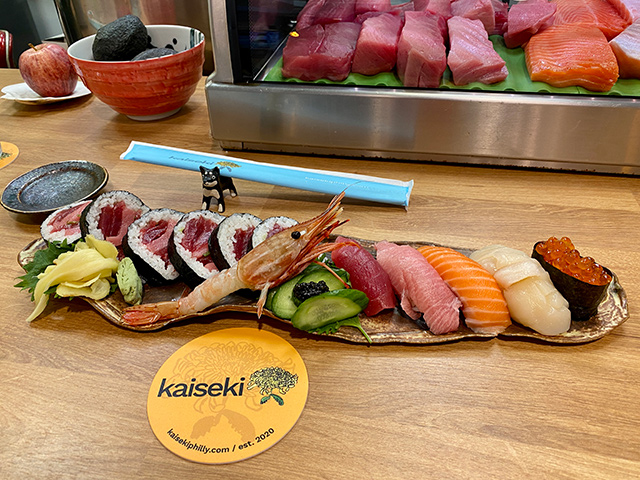
And then there's the tuna futomaki special, Chef Andy's giant maki roll filled with a giant mouthful of tuna, chu-toro, and o-toro. You cannot fit an entire piece of that futomaki in your mouth; that's how big it is. You also get five pieces of sushi: tuna, o-toro, salmon, hotate, and ikura. The botan ebi was included as a bonus. Bonus points for the bladderwrack seaweed, gari, cucumbers, and shiso. This was like two meals on one plate! I feel privileged to have experienced this very special Chef Andy creation. I've searched for a similar roll to this at all the top sushi spots. It doesn't seem to exist. The closest I could find is a futomaki that's not as big as this that's filled with scrap toro. Oy to scrap toro.
I started becoming a regular at Kaseiki in 2024. The food was great and Chef Andy is a nice guy and the closest thing to a sushi master I've met since the pandemic ended. Chef Andy graduated from the prestigious Sushi Chef Institute in California and worked at Morimoto and Hiroki during years when they were considered great. Kaseiki was one of my favorite sushi spots in all of Philadelphia. Unfortunately, Chef Andy had to close Kaseiki in the summer of 2024 and now works at Ogawa while he plans his next sushi venture. He had big plans to open a sushi spot in Rittenhouse Square, but things didn't work out as planned.
 Following the end of Kaseiki, I had to find a new chirashi spot. I looked up "best chirashi in Philadelphia." Kei Sushi came up, so I tried it one day. It was okay. Just okay. Oh, I know I must've been raving about it at the time, but that was because Kaseiki closed and I felt there was no place else to go. Now that I think back on it, I must've felt sadder about Kaseiki's closing than I cared to admit. Eating at Kaseiki was like eating at your favorite friend's home. It wasn't really a restaurant, but more like a space created for making takeout sushi that happened to have counter seats in front of it, like at an indoor mall restaurant. You can see the action happening right in front of you as Chef Andy sliced fish after fish with masterful precision. The space was nicely decorated. There were just four seats, maybe six if they pulled up chairs. It looked like the urban version of a small Tokyo sushi spot. The office building in which it was located housed various businesses so Kaseiki certainly enjoyed some good foot traffic during its time there.
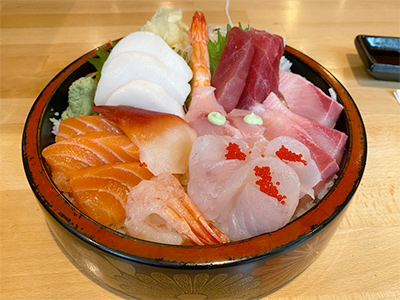
Kei was in its own restaurant space on South Street. The street was decked with many restaurants. You can't go wrong being on South Street. The restaurant was quaint and beautiful, too. So I tried the chirashi bowl one day. Why not? I mean, look at the bowl. It looks pretty and colorful, and aside from the surf clam and big chunks of hamachi, it's nothing special. The tuna is flavorless. The rolled pieces of "whitefish" topped with red caviar are also flavorless. The escolar is definitely a turnoff. It tastes great, but there are much better fish to include in chirashi. A slice of toro would've elevated this bowl. $34 is not a bad price for all this fish, but... it's just okay. I count nine seafood items (five fish, shrimp, sweet shrimp, surf clam, and roe). You can pardon the wasabi paste from a tube because they include real shiso leaves in the bowl. The gari is dry. Two small drops of wasabi cream adds flavor to the flavorless fish. The rice is dry. To me, this bowl is basically Chinese restaurant chirashi because of the dry rice.
I don't mind eating sushi made by Chinese chefs. Heck, some of the best sushi spots are run by Chinese and Korean chefs who are trained like any professional sushi chef. There are even LatinX and Caucasian chefs who do sushi justice because they've trained under masters. It's just that this particular place wasn't... ummm... a great sushi spot. It was good, but not great, and that's okay for some people. The chirashi bowl is colorful, or did I say that already?
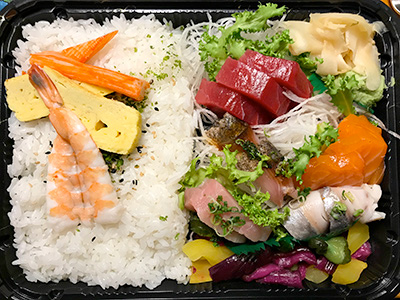 Let's take a look at another example of Chinese restaurant chirashi. You are looking at the chirashi from Tsuki Sushi. At $24, it's a nice price, but is it worth it? Errr... depends. It's basically Chinese restaurant chirashi because of the dry rice. You cannot simply have raw fish with Chinese rice. I'm sorry. Also, take a look at how long the rice grains are. This isn't sushi rice! The long grain rice makes this more like a kaisen don. I give points for the marinaded tuna and salmon. I will even give points for the tamago, gari, mackerel, and pickled vegetables, but the rice, oh my god, no. I think they sprinkled furikake on the rice. It's underneath the items on the left side, but that's not going to save the rice. It might even make the rice seem drier. At least the rice is in the same plate as the fish, unlike some all-fish plates trying to pass themselves off as chirashi on Reddit.
Wait, what kind of leaves are they using there? Frisée? Looseleaf lettuce? Why are there fake shiso leaves mixed in with real leaves? Minus points for that and the little ball of wasabi paste. There goes the dried radish noodles again. At least they got the spring onions right. Seven seafood items (tuna, salmon, mackerel, Japanese sea bass, hamachi, shrimp, and imitation crab) and tamago... not bad, but I'd lose the imitation crab. Just replace that with one piece of real king crab, charge a little more, and this will win points with the pundits. I almost feel as if they excluded the imitation crab altogether and replaced the rice with sushi rice, the chirashi would feel more like a chirashi. I'd be curious to see what this chirashi might look like in a nice bowl rather than a takeout container.
I would say that the amount of fish you get is very nice. The Japanese sea bass inclusion is meritorious. For $24, I'd just use all the ingredients with my own homemade sushi rice to make my own chirashi bowl, or just make sushi out of all the individual pieces. I feel like Tsuki is so close to being good. Better sushi rice will elevate Tsuki to the next level. The restaurant itself is very unpretentious with minimalist decor and the staff is super nice. If they just fixed the rice and removed the fake shiso leaves, I'd be going there a lot more often.
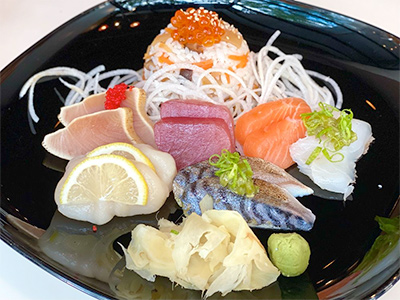 Seiko has a better deal at $22. Eight seafood items (five fish, scallop, and two kinds of roe) with a very special type of chirashi rice I've never experienced before. The sushi rice is mixed with shitake, carrots, and lotus roots! I found a recipe for this mixed rice here. It is indeed an authentic gomoku chirashi rice. Negi atop two of the fish are nice touches. Minus points for the dry gari and the little ball of wasabi paste, but the rest of the plate is quality seafood. The seared albacore is a winner. Much better than escolar. I also love that they remember I like mackerel. I like it much more than surf clam. You also get some kind of radish noodle garnish. It's edible, but I don't think you're supposed to eat it. I'm not sure what purpose it serves other than decorative. Every time you go, the selection will change, just like a good chirashi bowl should have. Chirashi pundits gave this bowl minus points for not having the fish cover the rice. I was okay with that. The rice is pretty to look at and it's packed with flavor due to the mushrooms and root vegetables.
I've been to Seiko many, many times. I like the modern, minimalist design space. I've always been impressed with the value of the dish. It was my go-to for at least two years. Then I got into the omakase craze. Well, I was always into omakase. I just needed to find friends who were equally as enthusiastic about it as I was. The omakase I was familiar with was more like kaseiki. Hot dishes mainly and a sushi course. That was what they offered at places like Morimoto; I've had their omakase 23 times. I've even had their all-truffle omakase. Now that was decadent. My recent omakase craze is really about sushi primarily. Sushi omakase is quite different than the omakase I'm used to at Morimoto. Sushi omakase is basically one small bite of goodness at a time and it's usually raw and usually sushi. That was good enough for me. If the sushi is excellent, that's all I care about. The funny thing is the most flavorless sushi - typically tuna - ends up being the most flavorful when prepared by a sushi master. You've got to age the fish. A Chinese sushi chef named Sam Lin taught me that.
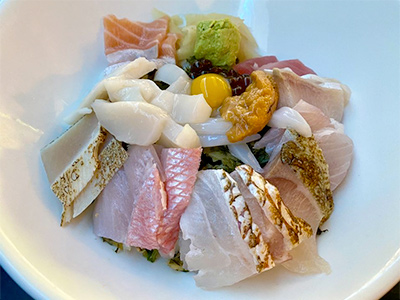 I'm not sure why so many people like Umai Umai so much. Perhaps people like its cozy, intimate aesthetic. Perhaps there are some good cooked dishes, but their chirashi bowl certainly wasn't at the top of my list. Tiny, razor thin slices of fish wins no marks from me. The selection was excellent, however. Ten seafood items in total (seven fish, scallop, squid, and sea urchin) and a quail egg. A fucking quail egg! How many times do you see this in chirashi? Bonus for the bladderwrack seaweed and gari. Minus points for the wasabi paste. It would've been a perfect bowl had they included real wasabi root and bigger portions of fish. As I recall, this was more like a sashimi plate with a side of rice in a separate bowl.
At $35, it's better than Kei Sushi's chirashi, but could be ranked higher with bigger portions. The scraps of salmon belly were so small as to be almost nonexistant. Are they just trying to give us a hint rather than a taste? The scallop was chopped up, funnily enough, to look like scraps. Gosh, please stop making chirashi look like scrap fish over rice! We're paying good money for this, not a ten-spot for a plastic container filled with odds and ends. That reminds me of a roommate of mine from long ago who recommended I purchase scrap salmon from the supermarket to save money. Scrap salmon came in small plastic containters. That was back in my poor days. "The fish tastes the same after you cook it," she said. That was the best tip ever.
For a chirashi to be so fish-focused is good, but I would've liked to have seen some ikura in it. Just replace one of the fish with ikura. That would elevate this dish to the next level. And please put all of this fine fish over rice! That's chirashi! This is just sashimi with rice on the side.
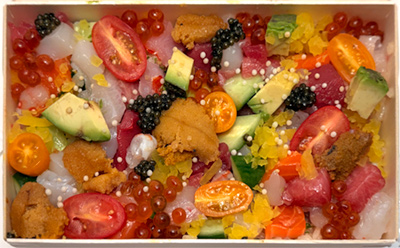 Kichi Omakase has a Bara Chirashi on their menu. I ordered it. I regretted it. From time to time, I cry about this because it's very upsetting to me. From the dry, brown pieces of uni to the overabundance of cherry tomatoes and avocado, this was certainly a festive-looking chirashi, but it seriously did not look like something a skilled sushi chef would make. Like, what the hell is happening here? Are they going for a Jackson Pollock aesthetic? Why include tomatoes? Where is the Otoro? The picture on their web site showed a box that looked completely different in appearance with each seafood item neatly arranged in columns. This one looked like a kid took a spoon and stirred up the ingredients in the box. On top of that, it was $70 for this odd creation with not enough ingredients to justify the high price. I felt cheated. I recommend that diners stick with Kichi's omakase, a much better value and a whole lot more traditional. They should remove this from the menu or retrain the chef who made this.
I wish I could find a picture of a Bara Chirashi with cherry tomatoes in it, but I can't. I rarely see avocado in such chirashi, too. If I didn't have to taste the brown uni and tomatoes, I would say that the rest of the chirashi tasted good. However, much better chirashi can be had elsewhere and for much better prices.
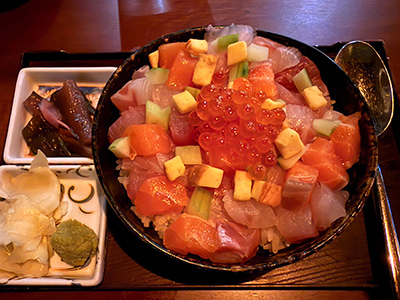 Kissho House is a relative newcomer in the omakase scene, opening in the summer of 2025. Their popular item is the Moriwase box, which includes nine appetizer-like preparations of sushi, sashimi, and hot and cold appetizers. One of the nine items is a mini chirashi bowl. One fateful day, after a dental appointment nearby, I had a chance to try Kissho House. I got the Mini Chirashi for lunch. For $21, I think there might've been four kinds of fish along with ikura and tamago. Tamago is not something you see in many chirashi bowls these days and the funny thing is it should be in every chirashi bowl! The fish was nice. Very silky taste with each bite and I like the Bara Chirashi aesthetic.
My biggest problem with this bowl is the dry rice. There was also no flavor to it. It was like... Chinese restaurant rice. Sorry, but that's not rice for a chirashi bowl! The pickled veggies were a nice touch and the gari and wasabi were nice. I think the wasabi might've been real or a combination of real mixed with wasabi paste, although I don't know why anyone would do that. The standout was the miso soup, which had delectable pieces of fried tofu in a very thick, flavorful broth with fresh seaweed. If Kissho can get its rice game going, they'd rank higher in my book, since their fish was so fresh.
Kissho also has a Tasting Menu and Omakase. Along with the Moriwase, I think they're diluting themselves too thin with all these premium options. They should just focus on what they do best and offer that as the premium option. The restaurant is gorgeous with its two floors of four distinct spaces. You can tell that they spent a lot of money making the restaurant look exceptional. Walking into the restaurant is the first area with a bar and some table seating. In the rear is a larger seating area. One floor down is the omakase bar and a second chef's table style bar reservable for private events. I feel Kissho House has a lot going for it and it will be interesting to see how its story unfolds.
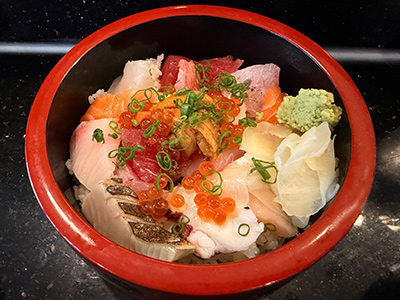 And then we have Nakama. This place has been on my radar for a while. Their social media shows fresh fish being imported weekly. Their chirashi bowl looks amazing. I thought it was all just posed artwork until I tried their chirashi bowl myself and OMG... it was so good! Here it is to the right and it looks just as good as those picture-perfect images I saw.
Chef Mitsutaka Harada is a Japanese sushi chef and that must count for something in a land filled with a lot of non-Japanese sushi and omakase chefs. But the hype is real, folks. People have been describing this place as a modest little BYOB restaurant with one of the best bang-for-your-buck omakases in town. If you've got a good omakase, then you have to have a good chirashi, too. At least that was the hope. And my dreams came true. This $23 bowl of goodness (it was $21 up until recently) is the Holy Grail of Chirashi. Ten different fish selections. Yes, ten!
I saw Chef Harada cut fish after fish from his two wooden boxes. He stopped at eight. And then he opened two more containers, a smaller wooden box with sea urchin and a small plastic container for ikura. Garnishes were simple but impressive. Real wasabi root. Ginger that actually tastes good. I typically hate ginger, also known as gari. I usually say, "Fucking ginger!" under my breath when I see pink ginger. I prefer my ginger to be yellow and here it is. Finally, the chirashi is topped with a generous helping of negi, or spring onion. It might even be green scallions. It doesn't matter at this point. The rice was nice, flavored right and not too wet and not too dry. It was perfect. In fact, the entire dish was flavored just right. The ikura provided any needed salt, the wasabi provided a touch of heat, and the gari provided sweet and sour notes.
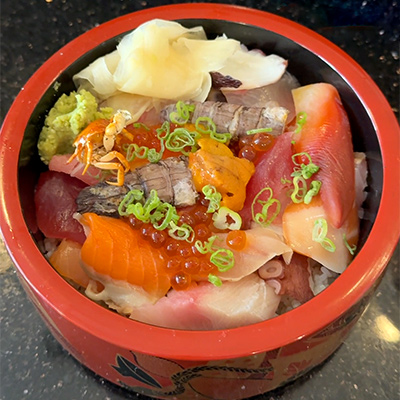 I foolishly dove into the sea urchin first because I haven't experienced sea urchin in chirashi at this price point... ever. This is such a good deal. Two of the fishes, the red snapper and the Japanese sea bass, were torched aburi-style. Again, you will not see this in any other chirashi for this price. Such amazing flavors all dancing in your mouth with each bite! My friends, this is the bowl to beat. It comes with a standard bowl of miso soup, the one everyone is familiar with with the fresh seaweed and soft tofu.
I've had many more lunch and dinner chirashi and each bowl basicaly outdid the previous one. I don't know how Chef Harada does it, but he manages to produce excellent quality chirashi for a reasonable price. Every bowl is a delightful surprise and a culinary masterpiece. There's no reason to go anywhere else for chirashi! My most recent bowl contained shako, uni, marinated ikura, and sawagani crab. These are premium items! The fish in the bowl included toro, akami, katsuo, salmon, king salmon, hamachi, tako, and surf clam. And that's not all! There are other fish in the bowl, too, as well as fresh wasabi, and it is all SO UNBELIEVABLY GOOD... You will not find better chirashi bowls in Philadelphia.
While it's not always fair to compare a chirashi from one restaurant to another, just take a look at the chirashi in the restaurant below. Yes, it was beautiful and yes it was very good, but it isn't Nakama. That's my highest endorsement. The variety of tastes and textures in a Nakama bowl is simply unparalleled and you will leave the restaurant with a huge smile on your face.
When I post Nakama's bowls on Reddit, the bowls are consistently ranked as one of the most popular pictures on r/sushi. Everyone is jelly that I get to eat such good things in Philly. I feel blessed to live in a city with so many great restaurants.
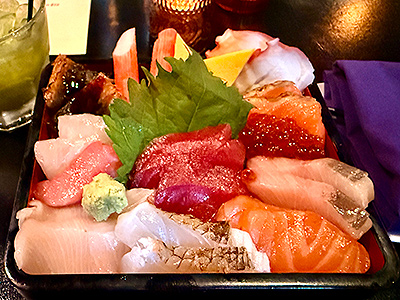 Yanaga Kappo Izakaya came highly recommended for their chirashi by a Redditor and it took me a while before I paid another visit to Chef Kevin Yanaga's Northern Liberties establishment. Truth be told, for just $7 more, you get a chirashi that's literally twice the value of nearby Seiko's chirashi. If I wanted a taste of chirashi, I'd go to Seiko, but if I want everything, I'd definitely go here. Thirteen different items sit on top of a bed of delicious sushi rice topped with pickled veggies and marinated mushrooms, similar to what's in the gomoku chirashi rice at Seiko. Perhaps the only disappointing "fish" of the day's selection is the crab stick. I hate crab stick. The bowl would feel superior without it, so I'll pretend they included shrimp instead, as the menu does say you get shrimp among the selections. Still, I would be a complete jerk if I said I didn't like this bowl. It was great. Akami, madai, salmon, kampachi, ikura, ocean trout, tako, unagi, some fish of the day, Otoro, hamachi, crab stick, and tamago. Yes, tamago! Nuff said. And you get a giant frickin' shiso leaf! Whoa! There will be comparisons to the chirashi at that place way down the block in Queen's Village, the place with the $355 omakase that you have to be blessed by a god to have a reservation, so we have to settle for the "poor man's (or woman's) omakase" - the chirashi bowl - instead. It is not a bad compromise. Yes, I'm talking about Royal Izakaya. Here, we have thirteen items versus ten... even if one of them is crab stick. Okay, so we actually have twelve items instead of ten for a cheaper price ($30), smaller cuts, but no sacrifice in quality. Color me very impressed. The bounty of fish hides a bed of rice that makes this a complete meal. The slices of tako are among the best I've ever had at a sushiya and every piece of fish looked and tasted pristine. Now the question arises: Is it better than Nakama? Ye-e-e-no, sorry, Nakama still wins because of its exotic fish selection that changes each week. At Nakama, you will always get sea urchin and other things equally premium, such as shako or sawagani crab. Sadly, you won't get tamago at Nakama, but you won't get that dreaded crab stick ever.
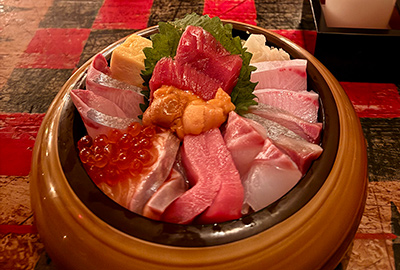 Now let's turn our attention to a place that is most Philly sushi lovers' favorite: Royal Izakaya. I mean, I know why people like it. It looks like a really unpretentious beer tavern, even though the back room omakase is one of the hardest reservations to get in America. The omakase dishes are so special that they don't exist on the normal menu. The normal menu contains lots of sake and beer selections at all price points starting at $5.50 and reasonably priced food items from $6 to $22 with the occasional bougie item, such as wagyu steak for $38 and sea urchin pasta for $32. The maki rolls are also priced similarly reasonable with the occasional bougie roll, such as the Aka-Taka for $27. Then there's the Chirashi for $52 and Royal Chirashi for $160. What the hell is a $160 item doing on a beer tavern menu? I ordered the Chirashi with high expectations because everyone said how great it was. It was time to put that to the test. From right to left, the bowl was filled with two slices each of hamachi, sea bream, madai, chutoro, king salmon, marinated ikura, kampachi, and tamago. In the center sat akami and sea urchin atop a shiso leaf. Peeking behind the shiso is ginger and wasabi.
Okay, the fish is some of the best fish I've had yet. Each piece was room temperature, thickly sliced, and a delight to eat. The rice was amazing. It was seasoned very well, so nothing else was needed with the fish. The ginger was delicious... the juiciest ginger by far... and I typically don't like ginger at most sushi restaurants. The tamago, typically the dessert part of sushi, was flawless with no brown spots at all. Look at how much care they put into the presentation. The bowl looks like an artistic masterpiece! There's no way you could take a bad picture of it. They even folded the damn kampachi... how could anyone not be impressed? I received a free cup of chawanmushi, a soup with steamed egg custard served in a teacup. This chawanmushi had dashi, little mushrooms, radishes, and spring onions in it. This was one of the courses they served at the premium omakase in the private back room (don't hold your breath... it's $355 per person, you need an American Express Platinum to make a reservation, and there's a waiting list of 1,000 people per night), so they made extras for us peasants in the bar area. I felt blessed.
The big three for chirasahi in Philly are Nakama, Royal Izakaya, and Yanaga Kappa Izakaya in that order.
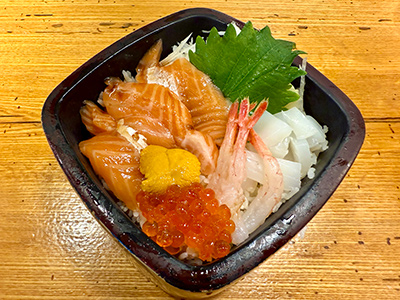 Although this next one is not technically a chirashi bowl, it would be considered a premium chirashi by most foodies' standards. Behold the Hokkaido Don! Take a look at what's inside this bargain of a $25 donburi at Lobster Place in the Chelsea Market in New York City. You get salmon belly, squid, sweet shrimp, ikura, sea urchin... and a shiso leaf! All over a bowl of sushi rice. The rice is nice. It's a small bowl, but it sure packs a punch with superfresh ingredients. The salmon belly and sea urchin melts in your mouth. The sweet shrimp is among the sweetest shrimp I've ever tasted. The squid is diced into small bits of crunchiness. The ikura adds a hint of salt in every biteif you want it. I even enjoyed the shiso leaf because it's superfresh, too.
There are other donburi options on the menu, such as the Bara Chirashi that includes tuna, salmon, yellowtail, cucumber, avocado, and jalapeno, but Bara Chirashi, to me, means having sea urchin in it. There's also the Sake Ikura Don for $28 that includes salmon, salmon roe, shiso leaf, furikake, and nori with an option to add sea urchin for $14. That bowl doesn't make sense when you could get the Hokkaido Don with more stuff for cheaper. I tend to think that all the other donburi bowls are listed on the menu just to fill up space. Just get the Hokkaido Don. It's the best value on the menu. I know someone is going to criticize me for not mentioning the Negi Toro Don, which is basically scrap toro tuna over rice. It's just one fish over rice. It's not interesting at all. I guess if you just like eating a single thing for your entire meal, you might get that.
Lobster Place is not a typical restaurant. It has a lot of open air seating where you get to see the action happen. Oysters shucked in front of you. Sushi made in front of you. You might even see a live sea urchin shucked in front of you. You get the idea. It's not exactly a date place, but more like a quick stop after shopping at the Chelsea Market. The other big thing to get is, of course, the lobster rolls. It is, after all, named Lobster Place.
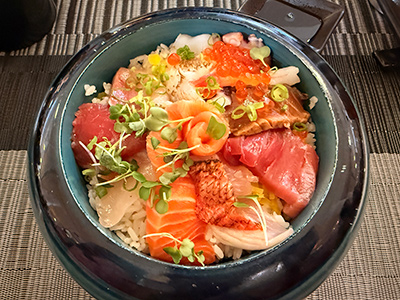 Now let's take a look at a similar place in Chicago called 312 Fish Market located inside 88 Marketplace just outside of Chinatown. It's more like a food vendor inside an H-Mart. 312 imports fish weekly from Toyosu Market in Japan. Many restaurants claim to source the freshest fish, but only 5% of American sushi bars get their fish from Toyosu Market. The pundits know that it's not the freshness necessarily that draws sushi connoisseurs in, but rather how much the fish is aged and seasoned. This is where having items like zuke salmon really elevates a nice bowl to amazing status. 312 is BYOB and has a selection of sodas, but you can go to the supermarket and carry in any of the dozens of available drinks from the supermarket to enjoy with your meal. That's amazing! The chirashi bowl is amazing, too! For $35, you get a potpourri of great fish all nicely prepared. The chef made my bowl slightly different from my son's bowl, which is a really nice touch. He had an extra piece of mackerel; I had an extra piece of akami. If I were criticize one thing, it's that they're a little heavy handed on the greens. I would've liked a bit less, but I get the aesthetic they're going for... the pinwheel of sushi with daikon radish sprouts and green onions in a swirling whirlwind. Art major here. Nothing escapes me. This was my son's first chirashi bowl and he thoroughly enjoyed it. 88 Marketplace has at least three vendors downstairs that sell various boba drinks. Save room for a dessert drink!
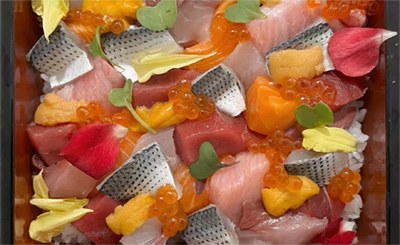
I refrained from using too many Japanese terms in my reviews of chirashi because then you might all think I know more than I actually know. I don't. I just like fresh seafood and if it's going to cost a lot of money, it better be good. I care more about the food than the atmosphere. That's why places like Kaiseki and Nakama will always have a special place in my heart. Take a look at Kaseiki's Bara Chirashi for $45. Look at that beautiful golden uni! Look at the delicious pieces of akami and otoro! There's even Kohada in it! And edible flowers! Chef Andy is a master. Sadly, Kaseiki is no more, but Nakama has filled that void nicely.
Thai Curries
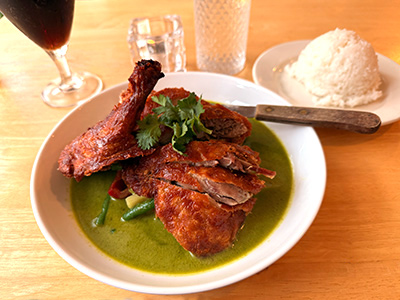 My favorite Thai restaurant at the moment is a BYOB named Smile Café. It's a modest little restaurant - not pretentious at all - run by a family who knows how to make great food. The Duck Green Curry is an absolute delight to eat with its succulent morsels of roast duck with crispy skin. For years I've been ordering this in the red curry-based Lovely Duck Creamy Special version, but make no mistake, this is every bit as good with green curry, a slightly spicier curry for all you Thai curry lovers out there. The fresh veggies were cooked perfectly as they had a good bite to them. With all the more expensive options out there, no doubt due to their attempts at repaying their liquor licenses, you have to be an idiot not to go here. It's food like your Mom makes, not the moms who only know how to cook four meals.
Let me say again that the duck is extraordinary. The crispy skin is heavenly. You will want to order the Red|Yellow|Green Curry version rather than the Lovely Duck Creamy Special version because the latter smothers the duck in the curry sauce and mitigates the crunch. Not counting the duck leg, the duck is mostly deboned, making it easy to eat. I found two extra bones in it, a rib and a joint that was part of the leg, but overall this was beautifully executed. The included steak knife easily cut through the pieces and all pieces were meaty and delicious. You really can't get much better duck anywhere unless you get a good one in Chinatown.
A good curry makes you want to sop up the last remnants of it with rice. You might even find yourself wanting more curry and rice. Only Indian curries can rival these kinds of flavors, but I would say Thai curries have an edge over Indian curries for me, if only because they are sweeter in taste. In the background is the requisite single-person serving of steamed rice and a lovely glass of Chateau de Coca-Cola, vintage 2026, a most complementary pairing.
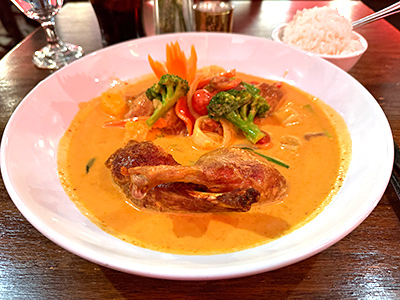 Erawan is perhaps my second favorite Thai restaurant. They have a really good Duck Curry that is basically like Smile Café's Lovely Duck Creamy Special. I dare say Erawan's version might be better than Smile's, but I think it boils down to how much crispiness each dish has. Erawan preserved the crispiness somehow, so it edges Smile's, but not by a lot. Smile's Duck Green Curry above beats this Erawan dish, but only because of the crispiness of the duck. Either of these would be eligible to be my last meals on Earth. I would almost consider this dish to be meat candy because it's sweet.
As I was gobbling up this dish, I commented to my waitress that it's "still the best duck curry in Philly," but she looked at me as if I were nuts. Just look at the vegetable medley in this dish. There are cherry tomatoes and broccoli in it that are oddly missing from other restaurants. If these restaurants want my humble opinion, I think adding cauliflower to this dish would take it to the next level. I know a restaurant that does this, but its name escapes me at the moment. Get your cauliflower in there, Thai restaurants! The curry is plentiful. I like that because you can really get into it with your rice. I wonder how many people actually eat the decorative carrot flower. Probably the same people who eat the veggies. Chateau de Coca-Cola pairs well with this, too, although I like Chateau de Pepsi a whole lot more. This is the most expensive duck dish of all the Thai restaurants in Philly ($9 to $10 more than the same dish at other places), so it's ironic that you get the least meat here. Still, the curry is sensational and I think you'll be sopping up your dish at the very end. Good to the last drop.
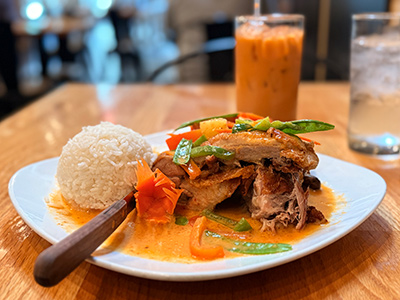 Pattaya Restaurant, formerly known as Pattaya Grill way back when, has been a Penn campus favorite for decades. I had one of my first dates there back in 1991, so it will always have a special place in my heart. The Chu Chee Duck is very good. The duck has more meat than Erawan, but isn't as good as Erawan or Smile Café, but for a West Philly offering, it's pretty much a solid choice. The curry is sweet and the bottled Thai Iced Tea, vintage the day before, is a beautiful pairing.
Most people would probably choose a steak over this as their last meal, but steaks are boring as a last meal. If you have a speck of creativity in your soul, you will want to experience variety in your last meal. Why go for something so one-dimensional as a piece of meat when you can go for an aromatic blend of sweet, sour, salty, and spicy flavors all in one dish? There is a time and place for steak dinners; they are great for celebration as a sometimes food to honor a special occasion, but for a meal that speaks to joys of being a foodie, Thai food is one of the most alluring options.
Now, I will say that Thai food, Vietnamese food, and some others are not for people with peanut allergies, however, if it's your very last meal, how much should you truly worry about this? Still, there are a lot of Thai and Vietnamese options that don't have peanuts in them. Except for Massaman Curry, Vietnamese spring rolls, and a few other selections, you will likely not find many dishes with peanuts in them because these days 2% of the Western population has peanut allergies and it's important to keep this small group alive because that's just what good folks do.
Foodies Love Omakase
Many of you foodies will hate me for saying this, but you're not a foodie unless you enjoy omakase. Omakase ("おまかせ") basically means "I leave it to you" and those simple words mean trust your chef completely to prepare your meal for you. I didn't grow up wealthy, but I had a mother who made several dishes for dinner every few nights. If there were five dishes, three were different proteins, like fish, chicken, and pork, and two were vegetables. There was sometimes a soup course before our multi-course meal. The multiple courses were family-style dishes that we all shared. Any leftovers - and there were always leftovers - supplied us with multiple lunches and dinners over the next few days. When we finished everything, my mother would cook up another batch of five dishes. She was a great cook, I'll give her that. Quite possibly chef level. Most mothers followed recipes. My mother remembered everything in her head.
In order to enjoy a meal that you don't get to choose, you have to learn to surrender to the skills of the chef. That leaves all the entitled people out. Sorry, this is not a Reddit subgroup, so you can't downvote me. I can just hear some of them now. "If she's such a great chef, she'll make exactly what I want!" they will say. HA! No omakase for you. The savvy people have learned how to surrender. If you have allergies, you tell the chef and he or she will work around those allergies and make something different for you, something that is no less spectacular in most cases. How wonderful would it be to try the greatest thing since sliced bread that you've never tried before? That's the wonderful thing about omakase. Because you placed your trust in your chef, good things can happen. Sure, you might get a clunker or two in your meal, but everything else will be so good that they will make you forget the clunkers.
When most people think of omakase, they think of Japanese sushi or kaseiki, but there are omakase meals of all nationalities. One of the best non-Japanese omakases is Vetri Cucina. It is one of the finest Italian restaurants in Philadelphia, nay, America. You can celebrate birthdays, graduations, and engagements at this place and no wonder why. The food is outstanding and there's lots of it and all of it is memorable, especially the Spinach Gnocchi with Brown Butter. You will probably wish to sell something valuable for this dish, it's that good. Sadly, the $215 multi-course tasting menu, called the "Seasonal Forchetta," is now six dishes instead of eight. It used to be known as the "Tasting Menu." They now repurposed that name for the four-course option for us poors at the still-extravagant price of $165 per person. The last time they offered more than six courses in the multi-course tasting menu was prior to the 2020 pandemic.
Feast your eyes on the eight courses I received pre-pandemic. It was such a great meal and the last of its kind.


Now let's take a look at French omakase. I think Lacroix takes the podium on that one because it's the only one of The Big Four French restaurants in Philly (Le Bec Fin, Lacroix, Le Cheri, Bibou) to still survive. You can tell by my happy face that Chef Jon Cichon did an amazing job with the food. Very few food experiences make me smile like that. I heard that the new chef, Eric Leveillee, is equally amazing. I have had successive Lacroix meals when it was helmed by Matthew Levin and Steve Eckerd and all were excellent. Of course, nobody prepares food quite like Jean-Marie Lacroix, but that's a very high standard. I was fortunate enough to enjoy two meals at Lacroix when Chef Lacroix was there.

Here's a blast from the past at Lacroix when Chef Steve Eckerd prepared the food in 2015:

Some of you might be wondering what the difference between a multi-course menu is and what an omakase is. The big difference is you don't get to pick what you want in an omakase. You let the chef decide. I wouldn't have it any other way. I might pick something that's not quite as good as something the chef might pick and if the chef asks me what I generally like to eat, it's still a surprise when he or she prepares it in his own special way. A chef knows what his capabilites are. It would behoove him to create his best dishes for someone who has placed her trust in him. This is why omakase is so special. It is an agreement between a skilled chef and a loving human. It is a sacred pact in which each person says, in silence, to the other, "I trust you."
This sacred trust forms a bond between chef and human. The chef becomes a divine god for a night. The human becomes the loving devotee. The beautiful thing is the element of surprise, like the presentation of several gifts you know nothing about, might be unsure of in several cases, but are little semblances of pure delight once you experience them. That is omakase.
A multi-course menu typically has some number of courses that you have total control over what you choose to eat at a fixed price. Le Bec Fin was like that. That's not omakase, although it can also produce similar feelings of delight, but without the element of surprise.
A tasting menu is a little different in that the selections are chosen for you, but you usually don't know what they are until you sit and dine. You might feel disappointed in some of the selections, but you might be intrigued by others. Some patrons might cheat and look at the menu online, but you're really not supposed to do that. Technically, Lacroix and Vetri Cucina have a tasting menu, not an omakase. It's just that the skills of Lacroix's and Vetri's chefs are so extraordinary that each dish can and does sometimes look different between two patrons. Where certain accompaniments go on a dish may be dictated by the cut of meat or whether or not the patron receives one larger piece of meat or two smaller ones. It's still an omakase, of sorts, because you are trusting the chef to assemble a meal that makes sense thematically and tantalizes your senses in all the right ways.
Tasting menus typically have dishes that are smaller-sized portions. The idea is you just get a taste of something great rather than a full-sized entreé that is typically larger than a single meal. You might think that tasting menus are like tapas menus. A tapas menu is different from a tasting menu in that there's no fixed price and you get to choose however many dishes you want. It can be two. It can be twenty. You pay for what you eat. Tapas are usually not as elaborate as tasting menu dishes. An omakase also has small dishes, but these are typically personalized in some way. Big people get bigger portions. Smaller people get smaller portions. However unfair that might be, that's part of omakase. A sushi chef might know that it is your 30th birthday and stack 30 little caviar eggs on top of your nigiri. One can argue that Japanese omakase has the greatest opportunity for stylistic variation, but what about other omakases?
I'm glad you asked. Let's turn our attention to one of the most intriguing omakases ever, the American omakase.
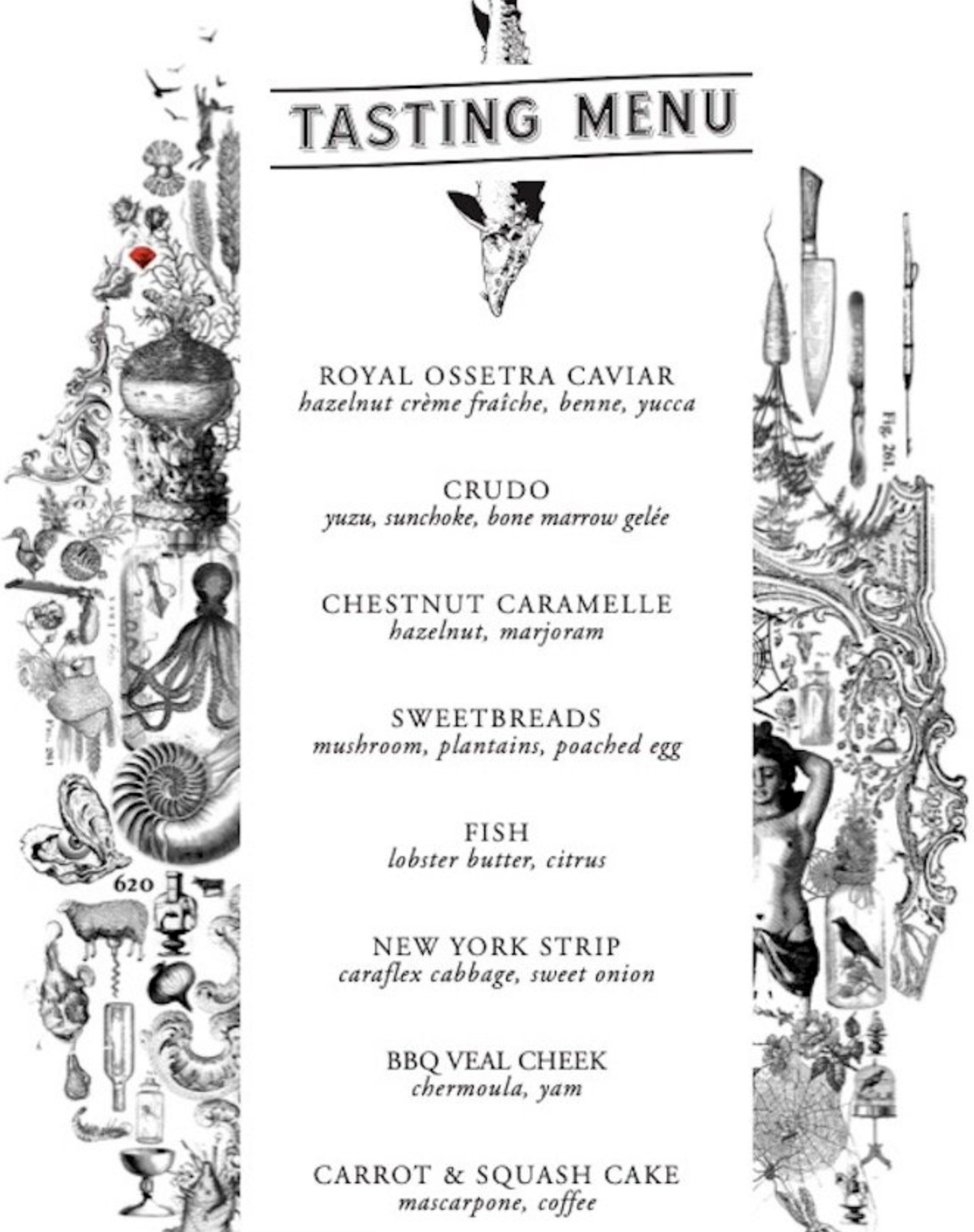
I don't think anyone could have fathomed that American omakase would the next big thing in Philadelphia, but, lo and behold, Philadelphia is basically the birthplace of America, so why not? Chef Chad Williams crafts a beautiful eight-course fusion-inspired omakase worthy of praise. So praiseworthy, in fact, that The Michelin Guide blessed him with a star. Chef WIlliams is no stranger to the halls of Michelin fame. He has worked at some of the best restaurants in New York, California, and Philadelphia, including Manresa, Saison, and the restaurant empire of Iron Chef José Garces. Here are some highlights from my birthday meal at Friday Saturday Sunday in 2022. I did not include pictures of the sweetbreads or veal cheeks because - I kid you not - those dishes looked so tantalizing, I ate them before remembering I should've photographed them! That's how great this meal was.


Thankfully, we had the insight to go to Friday Saturday Sunday before it earned its Michelin star because now the restaurant is always booked solid. Chalk that up to my superior restaurant selection skills.
Now let's turn our attention to Japanese omakase. There are two kinds, the one that is mostly kaseiki and the one that is mostly sushi. One of my all-time favorite kaseiki omakases is from Morimoto. It's the OG of kaseiki omakases. In 2001, Morimoto paved the way for other restaurants to offer omakase meals. At the time, only Vetri Cucina and Le Bec Fin were bold enough to offer an omakase-style tasting menu. It could be argued that omakase is an even more exclusive version of a tasting menu because tasting menus often offer selections from an existing menu whereas omakase is made purely from the mind of the chef. However, let it be known that creating an entire dish versus one piece of sushi are two different experiences and only the most discerning palates will care and the chefs that cater to these palates likely won't reside, or reside long, in Philadelphia, although that is changing as the culinary landscape of this city expands and progresses. Just call me a haughty poor for noticing that! Here is a sample from Morimoto's top-tier nine-course omakase, still a deal for $165, but now the restaurant publishes its omakase menu online, thus removing the element of surprise.

Perhaps the only omakase that exceeded the decadence that is Morimoto was Zama's. God rest his soul, Chef Zama was surely one of the greats. Yes, I ate all these things that had parasites in them, but in the hands of a skilled master, I'm still alive and kicking! Zama had two tiers of omakase and now there are three. Zama is now helmed by other chefs who kept the three-tier system: standard, Black Belt, and Platinum.

Sushi omakase is just like how it sounds, an omakase that is mostly sushi. I ordered it once from Morimoto and was completely underwhelmed. They simply arranged conventional pieces of sushi onto a plate and called it a day. I could've orderd that entire platter of Morimoto sushi omakase for far less at any other sushi restaurant, even the reputable ones, but that was back in 2008 when only the most worldly Philadelphias knew what sushi omakase was. Here is what sushi omakase is and should be. Chef Sam Lin's Sakana was the first to offer an affordable one before he jacked up the prices and created a sister restaurant, Yuhiro, that took over the mantle of affordable omakase. Here is Sakana back in the day in 2019. Twelve courses for $58 plus two add-ons of yummy goodness. One word: Firefly Squid. Okay, that's two words, but you get the idea. The omakase was special in that it had things like firefly squid in it. Back then, it also had wagyu in it, and this was the budget omakase for us poors! Sakana now offers only a premium 19-course omakase for $198. That's very pricey for how Sakana started out, in my opinion. My favorite piece was the add-on botan ebi. Chef Lin prepared the shrimp right in front of me. It was still moving mere seconds before I ate it. Awesome!

Some might call Uka one of NYC's "chalkboard omakases," a somewhat derogatory term for a budget omakase, and they'd be correct. However, nobody of sound mind would deny that you get a lot of quality nigiri for your money at Uka. The only misstep to an otherwise stellar meal is the aburi, or flame-searing, of the Otoro. That aside, you will notice that the sushi chef only used aburi on that and the Sablefish, so I won't fault him too much for an otherwise splendid meal. Be forewarned that Uka does like to upsell you on items, such as the Osetra Black Caviar at $25 a dollop - actually, a bargain - and the numerous, expensive handrolls - some of which are $25 each - at the end of your meal, but you can be thoroughly satisfied with just the base omakase at $56. Uka even gave me complementary sake throughout my meal. If you're ever in NYC, I recommend Uka.
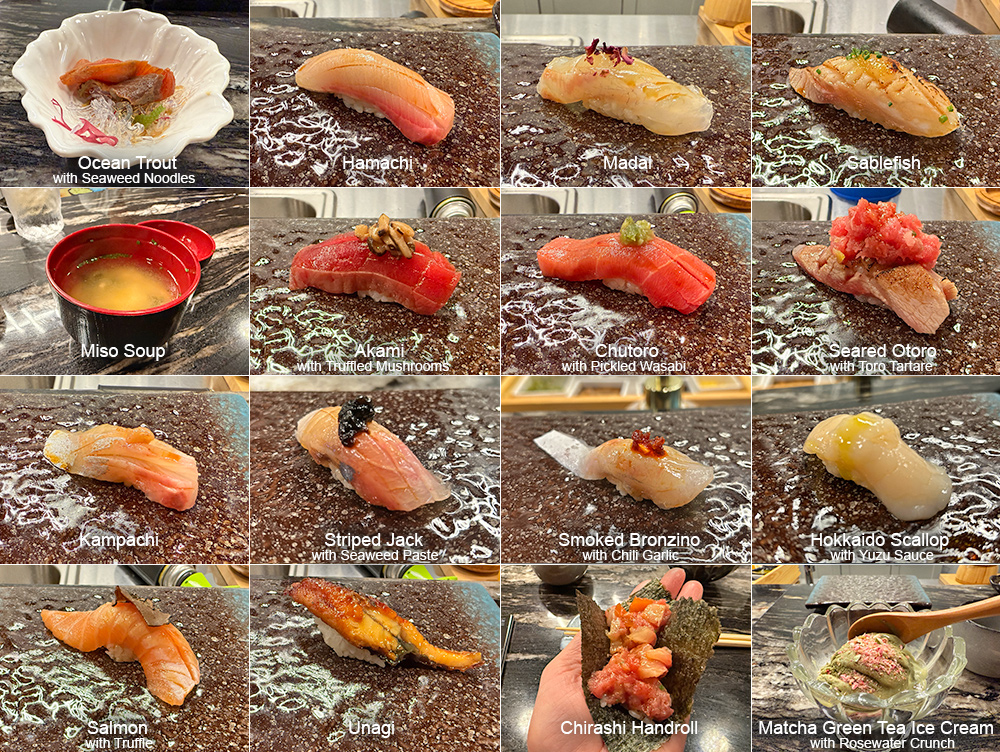
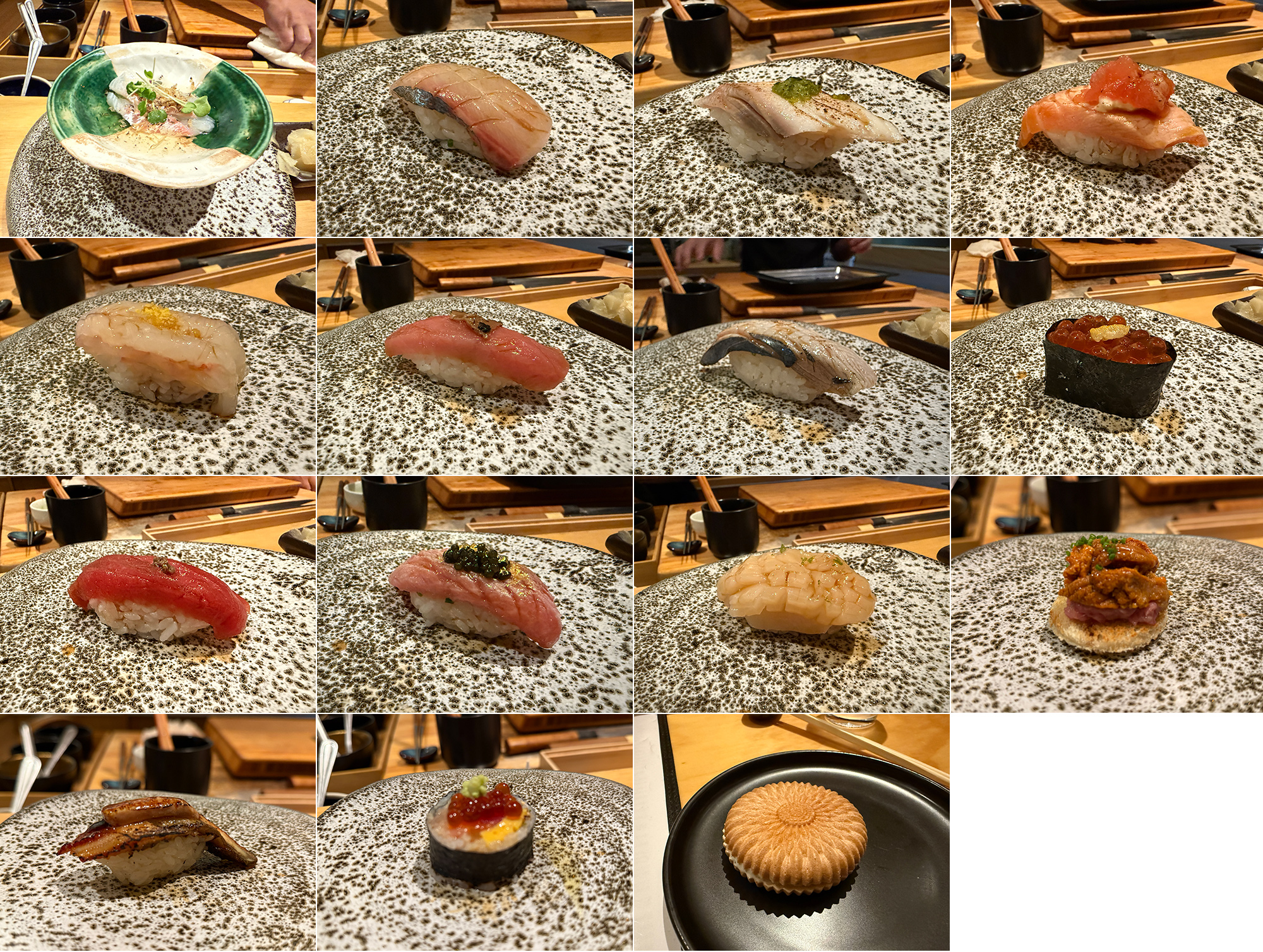
I've known about Yuhiro since it first opened in late 2023, but I wasn't convinced it would ever be as good as its sister restaurant, Sakana. I was wrong. Yuhiro might not have the mystique of Sakana and Chef Sam Lin certainly isn't there, but the sushi chefs running the show are really good. I always request the older chef who wears the baseball cap. I don't know what his name is, but he's really skilled. Before my first omakase here, the manager asked me if I preferred a chef who talks a lot or smiles a lot. I chose the latter. It turned out to be a great choice. Every piece of nigiri he makes is pure magic. His akami nigiri is quite possibly the best in Philly. It defines what "melt-in-your-mouth" means. While Yuhiro doesn't offer wagyu in its omakase, there's still sea urchin and if you really want wagyu, you can order it as an add-on, but don't sweat it. You've all had wagyu and it's not that special anymore. Their akami sushi is probably the best in the city and beats any wagyu you'll eat. Get an extra piece if you can. 2019 Sakana's akami wasn't like the akami they have now at Yuhiro. Chef Lin has really elevated his aged tuna game. Yuhiro's omakase has fifteen courses for $78 ($68 if you take advantage of their Friday and Saturday 9:30pm specials) and is one of the best values in the city. For that price, you can go often. The lack of wagyu is interesting. If you just add a wagyu nigiri to your meal, your total bill will be about the same as Kichi, another popular omakase spot. I think Yuhiro would edge out Kichi in terms of taste. Yes, the salmon has tomato on top. Don't judge until you've tried it! The only nigiri that I could possibly criticize is the Hotate scallop, which had a little too much lime zest on it. You might still be a little hungry after the omakase, as the nigiri pieces are small, so the specials menu might fulfill that need. I actually like Yuhiro's omakase bar better than Sakana's. It has a more modern feel and is more brightly lit. My favorite piece is, without a doubt, the akami. Yuhiro's akami tastes better than most sushi restaurants' toro.
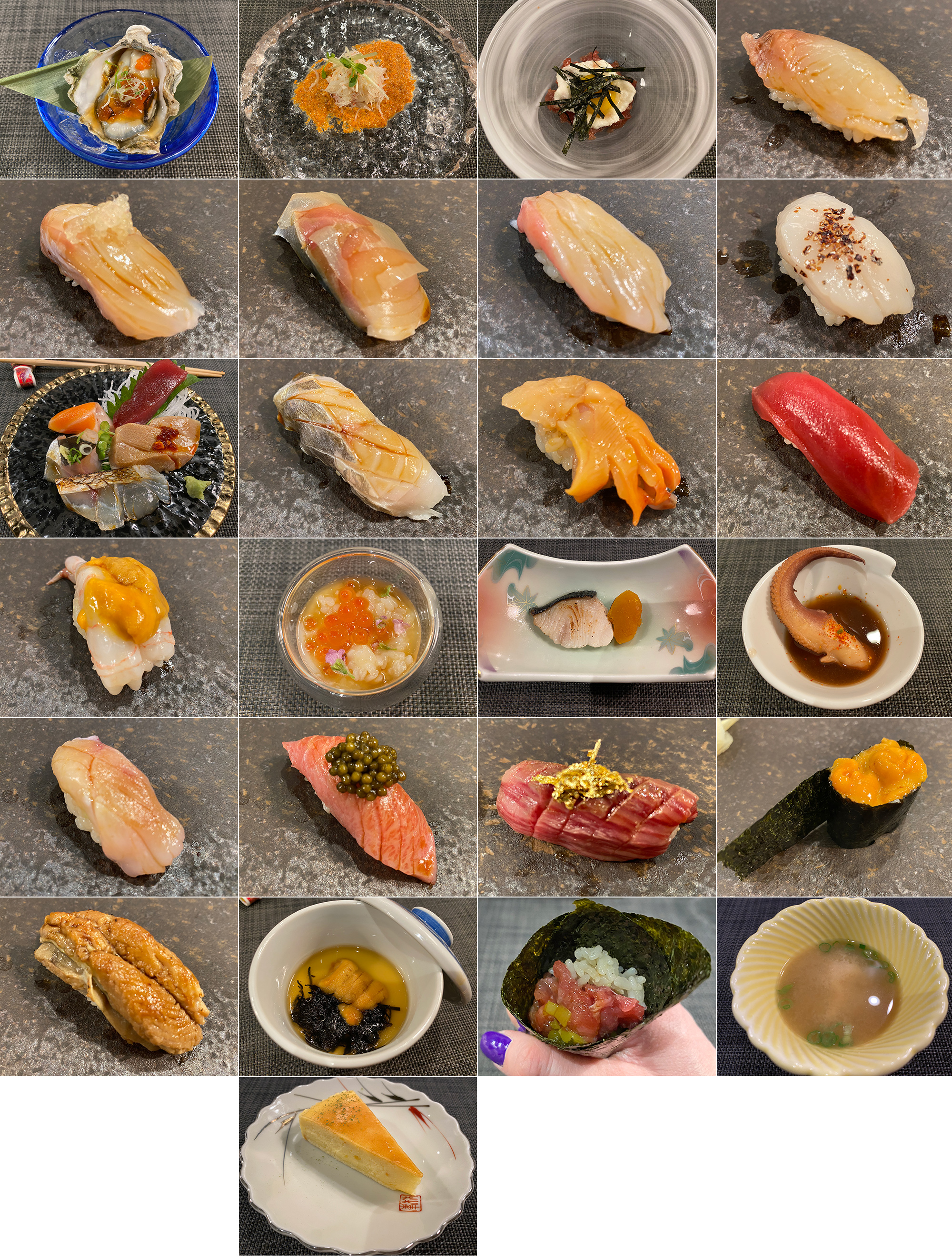
Ogawa claims to be $200 for 23 courses, but I counted 25 courses. Always a bonus. When I visited back in February 2024, Ogawa's son was running the show. Now Chef Carlos Wills is at the helm, so you might have a different experience than what I had, but he's a very capable chef. Along with heavy-hitter Chef Andy Bernard of Kaseiki fame, the pair makes one of the most talented sushi teams in Philly. The menu is divided into a number of sets: Cold Appetizer, Nigiri part one (5 pieces), Sashimi (5 pieces), Nigiri part two (5 pieces), Hot Appetizer, Nigiri part three (5 pieces), Handroll, Miso Soup, Dessert. Everything was so good it was like I was eating a meal of seafood candy. One of my favorite dishes was the sea urchin and fresh seaweed chawanmushi. The toro nigiri comes with a generous helping of Osetra caviar. The sashimi plates comes with monkfish liver, always a welcome surprise. You also get to eat Davy Jones from Pirates of the Carribean 3. The nigiri are small, but with 23 courses, you will feel satisfied after your omakase. Perhaps my only criticism is the four nigiri in the first set that tastes almost exactly the same but with different toppings on them. My favorite piece is the toro with caviar.
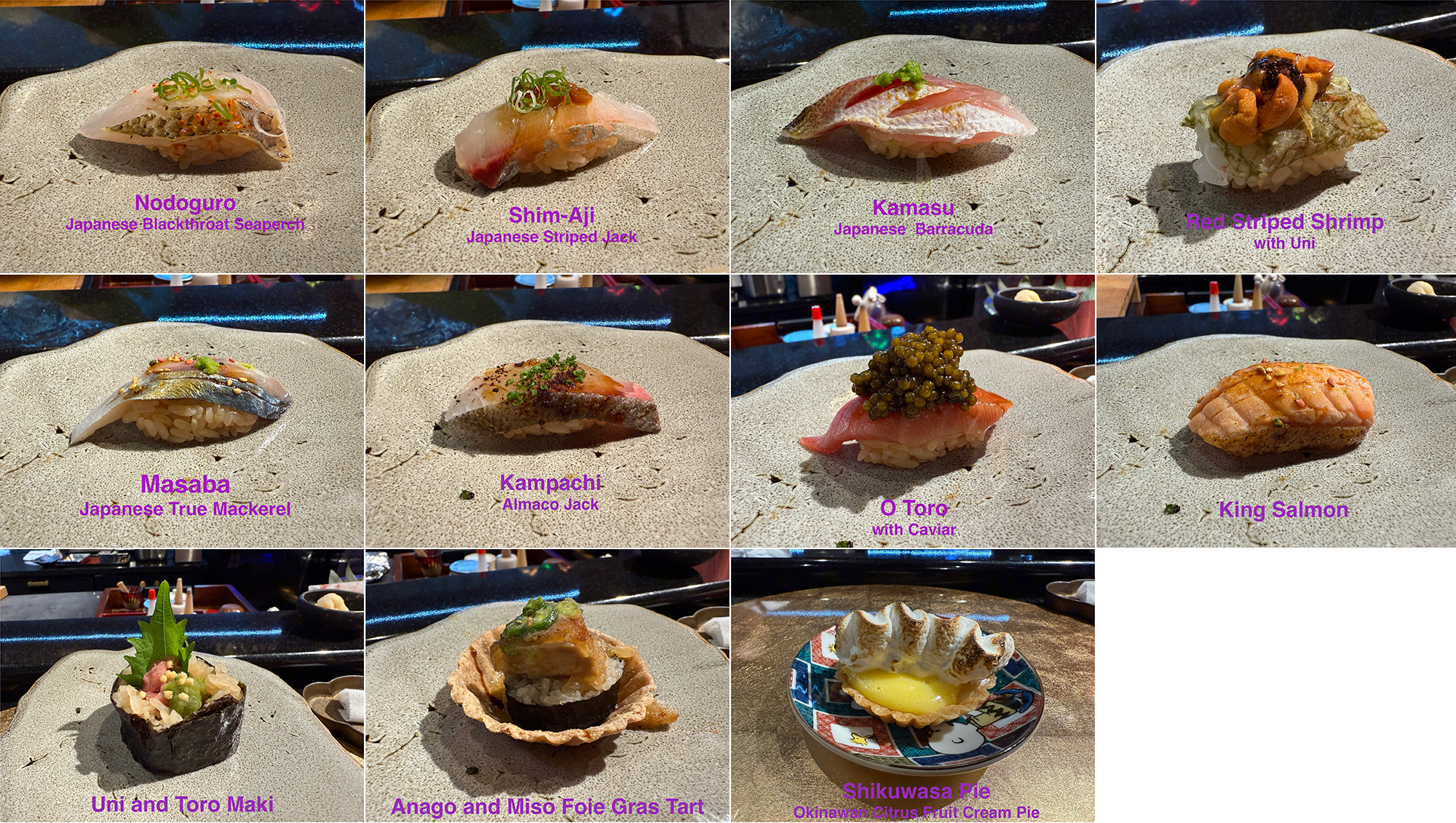
The 637 Philly Sushi Club at Yanaga Kappo Izakaya is a 20-course omakase for $180. The omakase room is hidden behind a bookshelf. Yes, you heard that right. It's one of the more unique omakase experiences in Philly as each guest is led one by one into the ornate room. The room is decorated with lots of nostalgic toys giving it a quirky feel. Chef Yanaga showcases a large plate of pre-sliced fish for everyone to see what they will be eating. The experience is actually 19 courses with the twentieth course being a takeout course of stuffed tofu pockets and a chocolate chip cookie. Some of the more outstanding nigiri pieces included Kamasu, Red Striped Shrimp, and Masaba. Chef Yanaga really piles on the Osetra caviar on his amazing O-Toro nigiri. You can tell why Chef Zama chose him as his right hand man. His slicing and garnishing skills are really quite extraordinary. The little dessert tart at the end was very good. I loved interacting with Chef Yanaga. He's really funny. My favorite piece is the masaba.
Kichi Omakase is one of Philly's omkase treasures. The ground level omakase bar looks beautiful and I heard there's a modern version of an omakase bar upstairs. Sadly, I tried to reserve the upstairs bar but to no avail. At $95 for 16 courses, Kichi is slotted perfectly between Yuhiro and Nakama. It's tough to argue who is better - Yuhiro or Kichi - as both offer about the same number of courses, but at different price points. For $95, Kichi gives you A5 waygu and four kaseiki dishes before the sushi run. At Yuhiro, wagyu is an add-on. If you want mostly sushi, go to Yuhiro. If you want four great kaseiki dishes along with sushi, go to Kichi. The miso cod with sweet potato puree was a pure delight to eat. The A5 wagyu with foie gras is a treat. A few of the nigiri didn't look very pretty, but they all tasted great. The nigiri pieces are slightly larger than Yuhiro so you're going to be full after your omakase. I would definitely return again because you're getting a really nice value for your money. My favorite piece is the wagyu with foie gras.
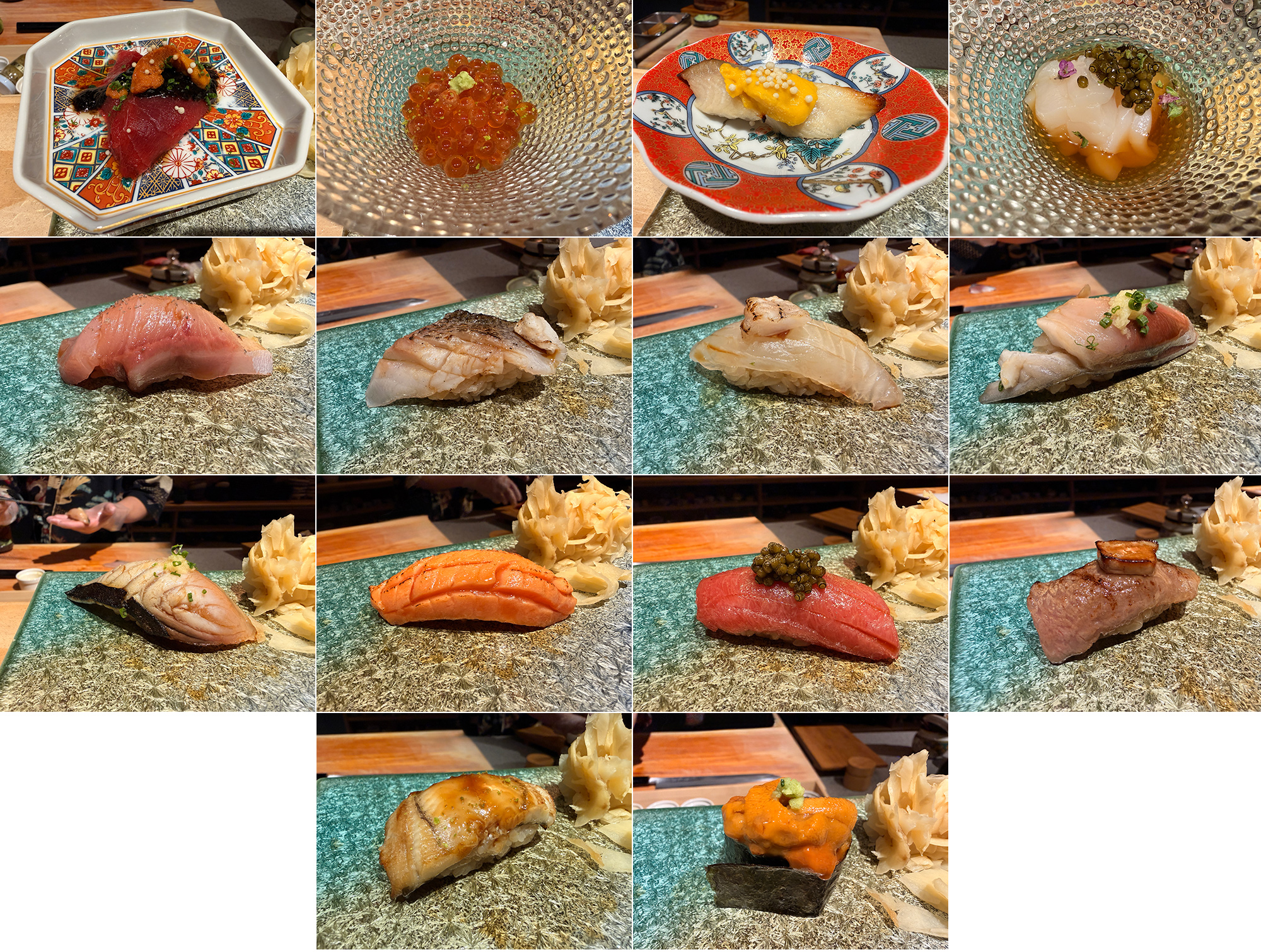
Nakama has truly been a beautiful surprise. Chirashi or omakase, you can't go wrong. Chef Mitsutaka Harada has worked at Morimoto, Zama, and Sushi Suite. The 15-course omakase for $125 includes highlights such as Firefly Squid, Botan Ebi Aburi-style, beautifully cut Shad, Toro with Osetra Caviar, A5 Wagyu with Foie Gras, Eel with Sea Urchin Cream, and Uni Snow Crab Rice Bowl. The kaseiki dishes are sprinkled throughout the omakase experience, as they should. Chef Harada stopped and waited to see my response to each dish before crafting the next one. Some of the dishes were magical. No bad dishes in the bunch. Chef Harada worked quickly. I was done in about an hour. Because of the larger-sized nigiri, I was actually full after the omakase. Not so with Yuhiro or Sakana. Chef Harada asked me if I wanted to try anything on the specials menu. I had my eye on the monkfish liver, but I honestly couldn't eat any more. My favorite piece is the A5 wagyu with foie gras. Chef Harada said he uses a more flavorful cut of wagyu than other omakase restaurants.
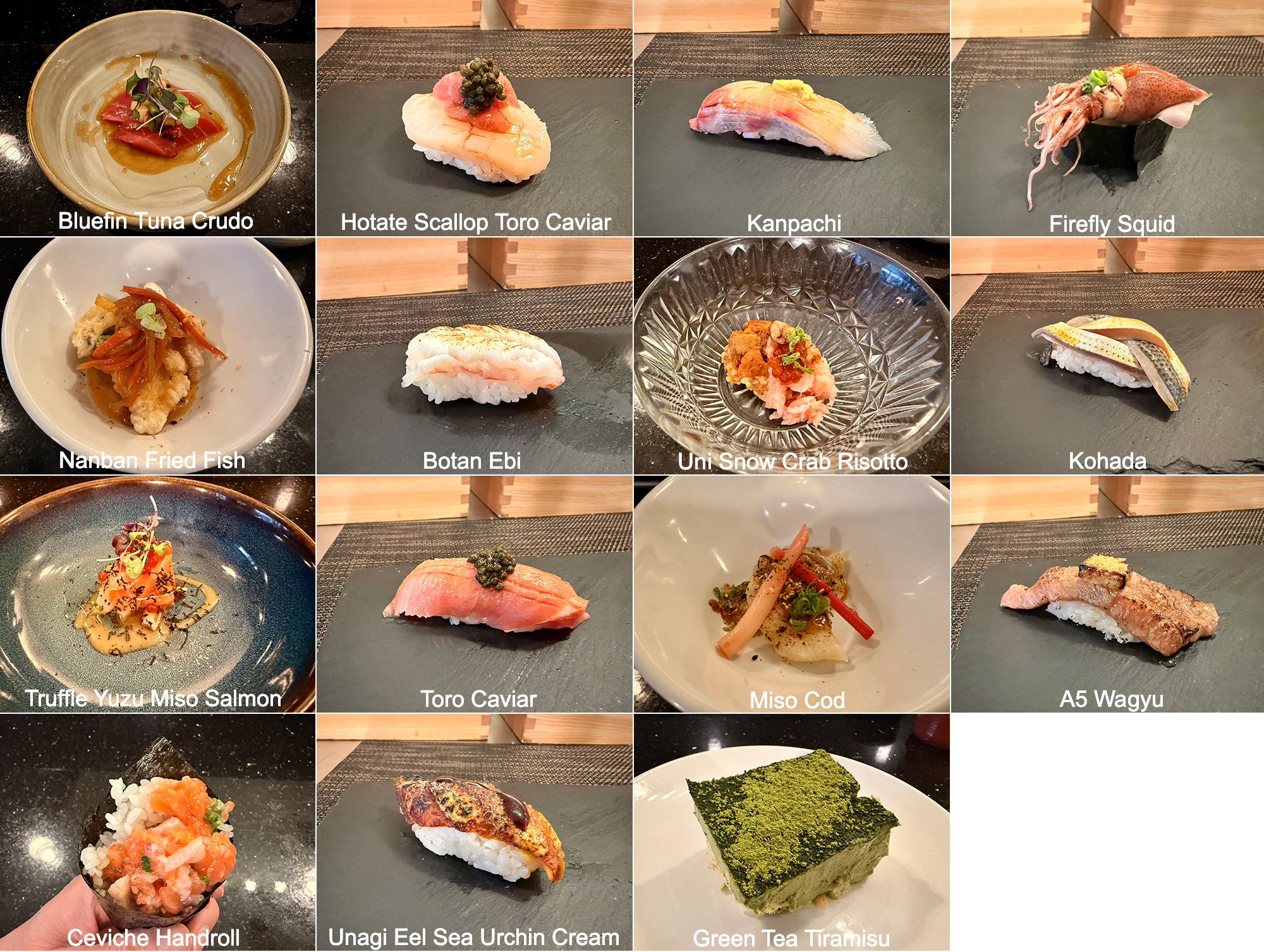
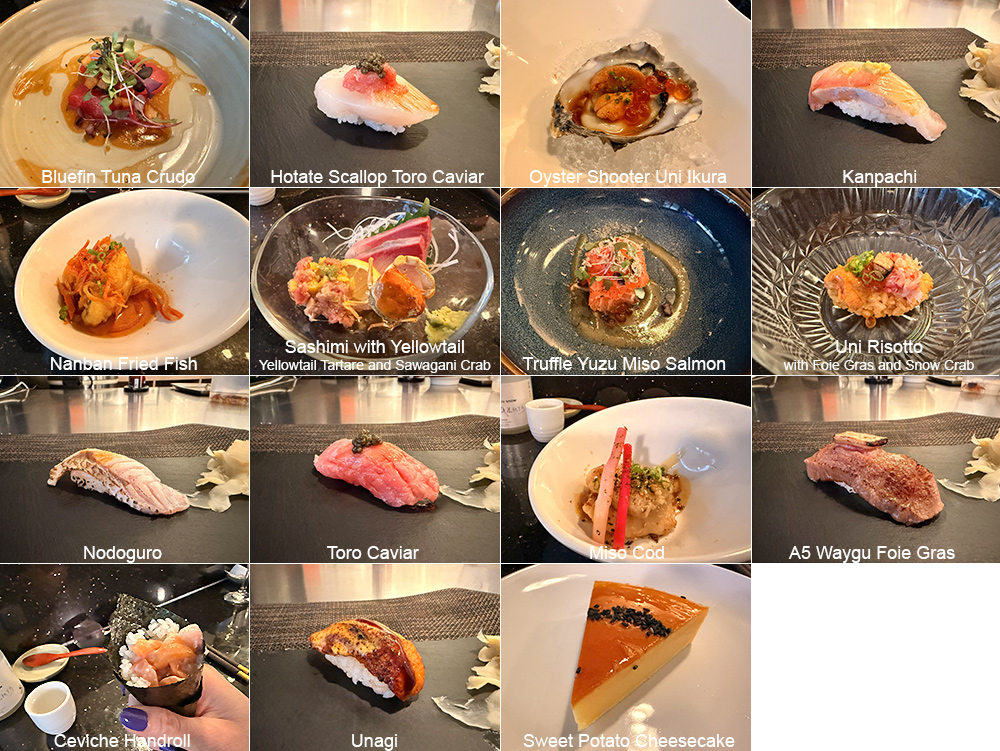
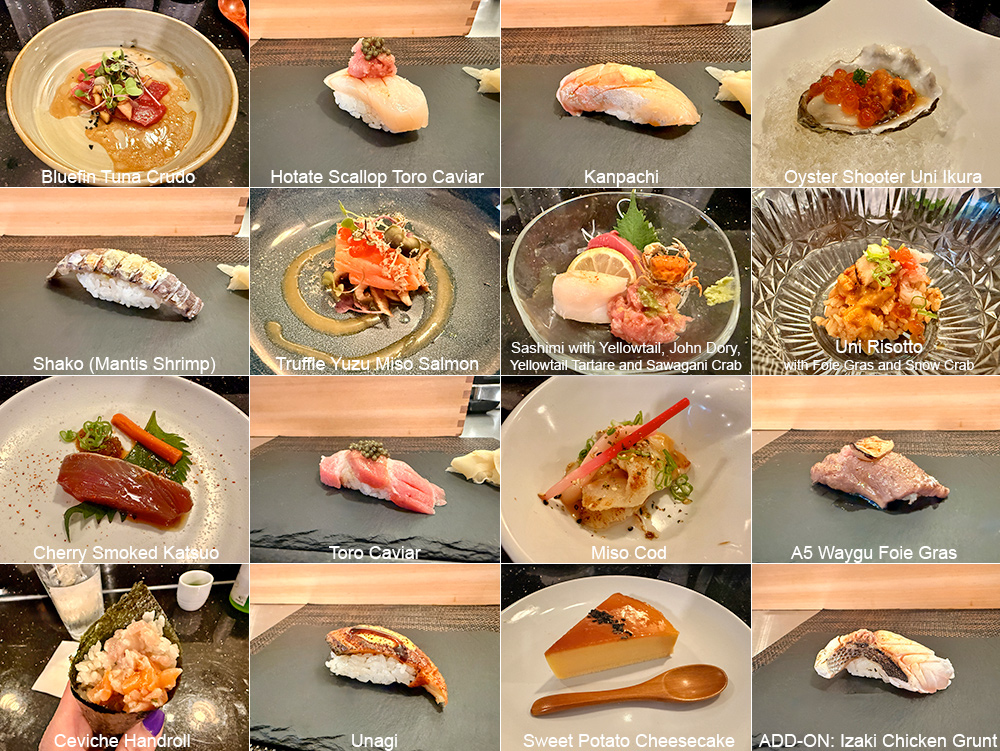
I hope you see that in the three omakases I've had at Nakama, each had a completely different cut of Toro. To a foodie, that's magical! By the way, Izaki Chicken Grunt is fire. You must get it if it's offered. Get it aburi-style, just like how I got it above. You'll thank me later.
Now let's move on to a very, very special meal I had on July 22, 2026. I had asked Chef Harada to prepare me an omakase that is not bound by his typical omakase offerings. Some items are from Chef's omakase menu. Others are completely crafted from his mind and not found on the menu.
“I open myself to your creativity,” I said to Chef.
Chef Harada smiled. He knows what I like and he delivered.
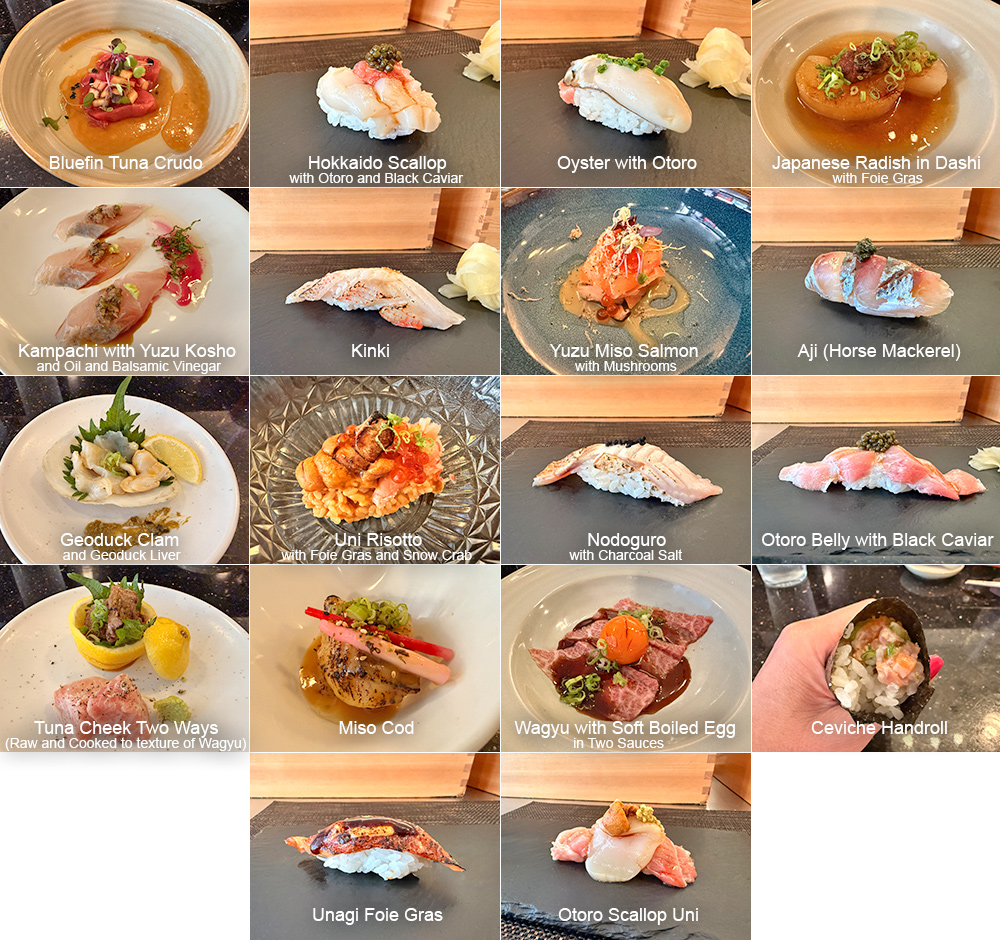
“How was everything?” Chef Harada asked at the end.
“Everything that is good in life is in that omakase,” I replied.
This was, by far, the best omakase I've ever had. I could tell Chef Harada put his heart into everything he made. This was better than Yanaga and Ogawa. I ate like a queen. No gold flakes or gold glitter needed. Nakama's omakase was all about the food. What a treasure it is to experience it! This is the omakase I will remember for years.
Oroshi is what Sakana used to be. At $68 for fifteen courses, it's an affordable, budget omakase experience priced right so you can eat there multiple times a week. A number of workers from Yuhiro run the restaurant. At least four sushi chefs on staff, which is a little frustrating because sometimes you want to go back to a certain chef, but he's not available. Conspicuously absent from the omakase menu is wagyu, but it's not an issue. I never understood why a seafood omakase is supposed to have wagyu. I guess it's for all the diners out there who believe they're experiencing luxury just because they have a slab of beef in their mouths. If you're a true sushi lover, you'd rather have fish than beef. The homemade ice cream at the end is great; I don't even miss the wafer cookie at Yuhiro. Just like Yuhiro, each piece of nigiri is small - lady size and perfect for me - so bigger eaters may need more sushi at the end. It's a very similar experience to Yuhiro, but because there's no wagyu, some diners may feel cheated. However, you're getting King Salmon and also three different tuna instead of two like their competitors, so there's that. The Otoro piece is very special. If you really must have wagyu, you can order it as a special at the end of your omakase. There's also a ten-course $48 lunch omakase for the midday crowds. Oroshi is great value for the money.
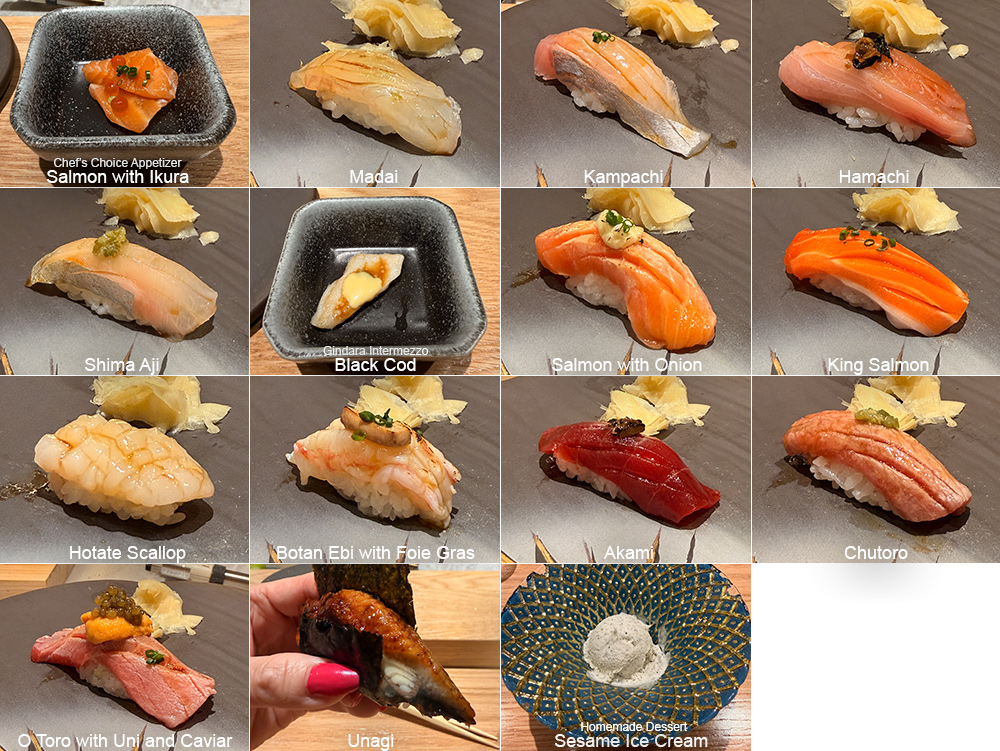
The second time I visited Oroshi, the chefs were not the same as the first time. Apparently, they have four chefs in their employ. I'm not a fan of that. This time, the chef flame-torched almost all the pieces. I'm not a fan of that. Aburi should be used sparingly, not as a main technique. The omakase was still good, but my first visit was better. I received three free handrolls at the end for a misunderstanding on their part.

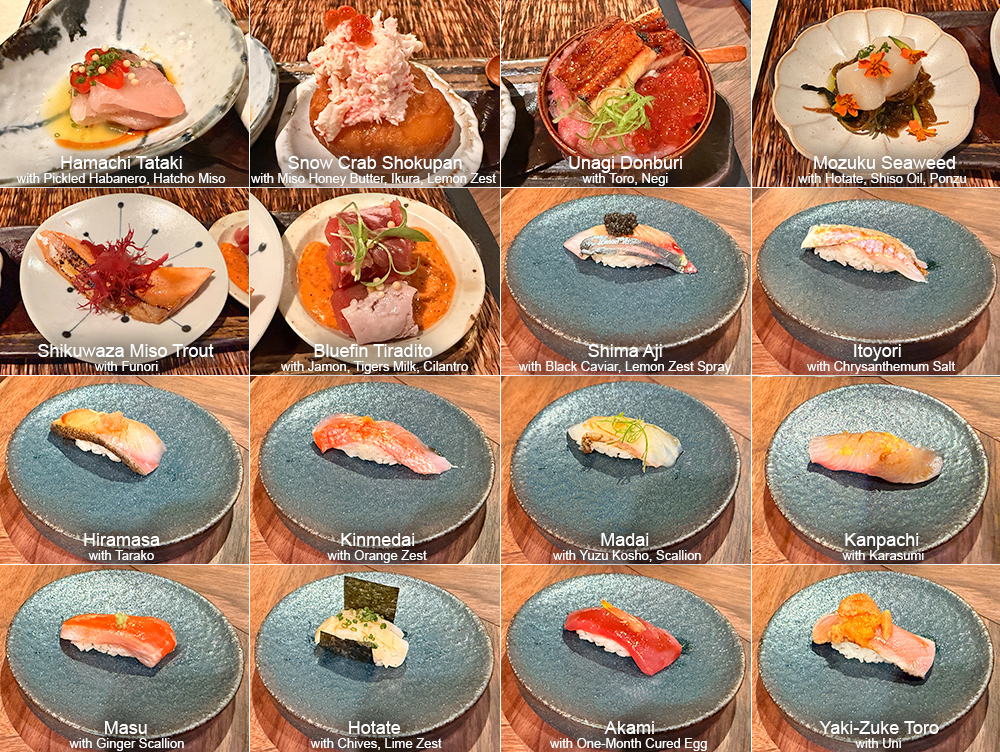
Aogami is Manyunk's first entry into the omakase realm. Located in the basement of Chaaba Thai, $85 gets you 16 courses divided into two zensai (appetizer) sets of three items each and a nigiri set of ten pieces. Whoa. I had to rub my eyes to make sure they weren't deceiving me. $85?! And from a chef who used to work at Zama, Pod, and Yanaga Kappa Izakaya? Incredible. I snapped up a hard to get reservation on a Friday night and had an outstanding omakase. There was even a bonus dessert course and a gift for opening week guests. "If we stopped after the first Zensai set, I would've been totally happy. Anything beyond that is icing on the cake," I said to Chef LoMonte. The first two sets are worth $85 by themselves at any Center City restaurant. The sushi set is a bonus. "If I could just spend my day taking raw fish and making this beautiful artwork out of just rice and fish, I would be content for the rest of my life," Chef LoMonte said in an interview with The Dish.
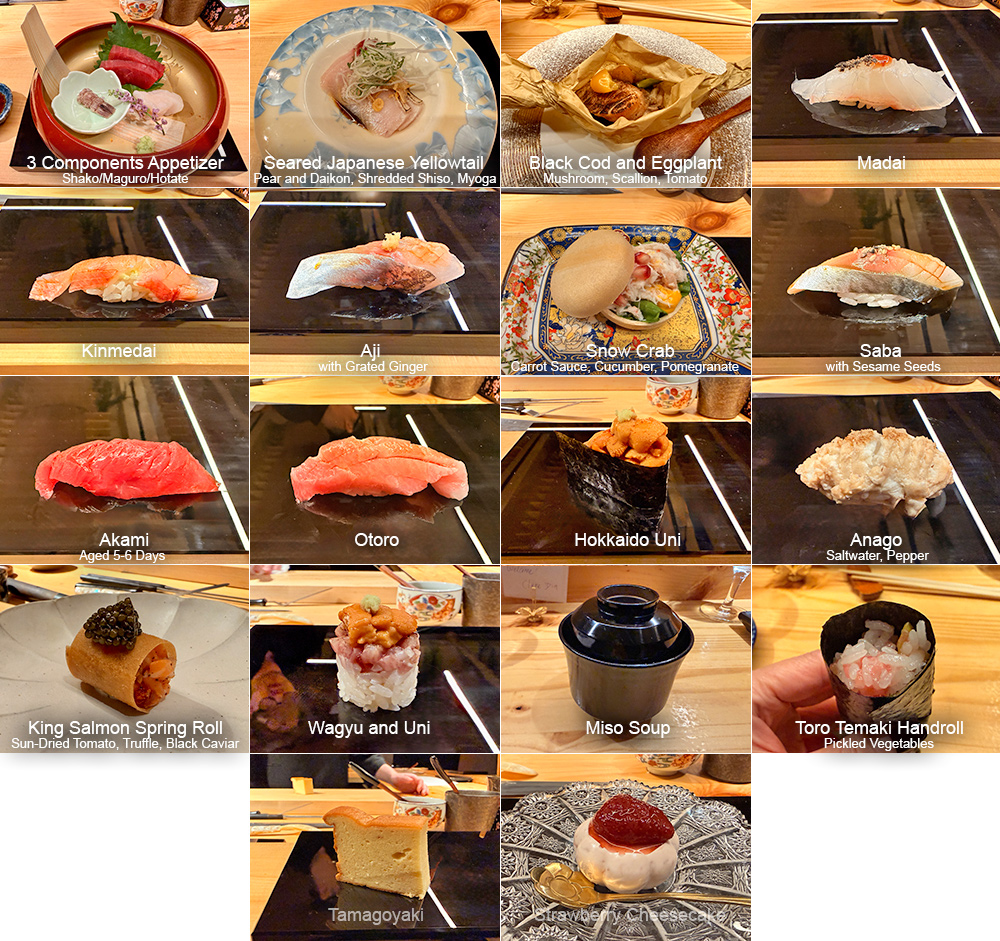
Kissho House's lunch chirashi was underwhelming and their moriwase box had some hits and misses, but their omakase... wow, I should've just splurged on their omakase from the start! I kept hearing positive reviews, but I didn't want to get my hopes up. I know their fish is amazing; it's just the chirashi rice that irked me. The rice they prepare for their nigiri is perfectly seasoned and not the dry stuff I got with their chirashi. Eighteen courses of sushi artistry: three starters, three nigiri, an intermezzo, five more pieces of nigiri, a unique creation, a gunkan, a handroll, soup, and an Eastern and Western dessert. Extra points for the tamago, the fish to rice ratio in the sushi, and the choice of fish. "I didn't want too many white fish on the menu because they lack the flavor of fish like mackerel," Chef Jeff Chen said. His subtle, minimalist approach to crafting nigiri is a welcome change of pace to the many budget omakases that flametorch everything just to entertain guests. I also noticed that Chef doesn't put "hats" on every piece of nigiri, instead opting to let the fish speak for itself. Perhaps the only disappointment in the nigiri was the broken piece of kinmedai. Chef's admission to using aburi on things like searing fatty portions to enhance a fish's flavor is spot-on. I was in sushi bliss when I saw the steam rising from a fresh piece of anago. Not all the courses were fantastic, but the majority were, and were presented very well. The restaurant is gorgeous and gives off lux vibes. The omakase room looks like it's been lifted off the pages of a magazine.
My honest opinion of which omakase is the best? We have three categories: budget (under $100), midrange (~$150), and expensive (~$200 and up). The omakases seem to fit neatly into these three categories. In the budget category, Yuhiro, Kichi, Oroshi, and Aogami are the contenders. Oroshi and Yuhiro offer true budget omakase experiences with great fish choices and prices that won't break the bank. Kichi and Aogami offer more elevated kaseiki experiences in their omakases. Oroshi offers two kinds of salmon, three kinds of tuna, and four kinds of white fish. Premium stuff, not run of the mill fish, but almost everything was flametorched. Aogami gives the very best zensai sets with a 10-course sushi set that focuses on the beauty of premium white fish without the need for aburi. I love Yuhiro's akami zuke and Kichi's miso cod, but newcomer Aogami beats them all with a miso trout, snow crab milk donut, and an amazing unagi, toro, and ikura donburi. If you go, try to get a counter seat so you can watch Chef Tom LoMonte make the food. Winner: Aogami. Runner-Up: Kichi. In the midrange category, we have Nakama, Kissho House, and 637 Sushi Club. Kissho is very good. Chef Jeff Chen's pedigree speaks for itself and his past stints at Royal Izakaya and Hiroki assure superior quality and presentation. You're basically getting Royal Izakaya and Hiroki for a bargain price. However, Chef Mitsutaka Harada of Nakama beats Kissho on the variety of fish and the various styles and presentation of his dishes. Chef Harada is always trying to innovate and that comes across in every new dish he creates. If you have $125 plus tax and tip, don't hesitate. Just go. You'd be silly not to. He was head chef at Morimoto and Zama prior to opening Nakama. Now you'd be stupid not to go. Winner: Nakama. Runner-Up: Kissho House. In the expensive category, we have Ogawa and 637 Sushi Club. Chef Kevin Yanaga of 637 impresses patrons with his innovative approach to his kaseiki dishes and his delightfully eclectic space. Ogawa wins until someone blesses me with a reservation at Royal Izakaya or I am overwhelmed by the improvements in Sakana. I will try Sakana again soon, my friends. Winner: Ogawa. Runner-Up: 637 Sushi Club. Overall, I will have to say that, of all the omakases I have experienced in Philly, Nakama is the winner by far.
Omakases for 2027: Uchi ($175), Sakana ($198), and Royal Izakaya ($355)
And just in case you think I'm from Snob City just because I enjoy all this expensive food, I also love scrapple and good comfort food for under five dollars!
The Last Word on Omakase by @phillysushigirl
There will be people in the world who will try to dictate what you should and should not like. Ignore them. Food is a very personal experience. You don't have to like what other people like. I've seen critics ogle over subpar sushi because they think it looks more authentic than the "chalkboard sushi" spots. They will insist that certain things remind them of what they ate in Japan when, in reality, Japan's culinary diversity spans more than just one singular type of sushi style. What other people like is what they like. Use what they say as a guideline. Find your favorite sushi spot on your own and go there because you enjoy it, not because of a review. The best sushi spots are the ones you wouldn't mind going to again and again.
Ignore any critic who believes that all nigiri should have a super-tiny amount of rice. To that critic I say one of your omakase chefs must've looked at your small mouth and made small sushi just for you. Not everyone has your small mouth. Omakase is a very personal experience between the chef and the person dining, not to appease your specific tastes. I also find it annoying that certain critics poo-poo budget omakases for doing the very same things as the expensive ones. A very popular, and expensive, omakase here combines many different fishes in one piece. When a budget omakase does this, these critics scream foul, but when the expensive place does it, they praise it to no end. If you can only enjoy something just because it's expensive, you then are a hypocrite!
All images and work herein © 2007-2026 Clare Din. No reproduction without permission. All rights reserved.